Energy & Thermal Performance
Do Surfmist Window Frames Keep Your Home Cooler? Solar Absorptance Explained
By Sheng Xu · 30 September 2026
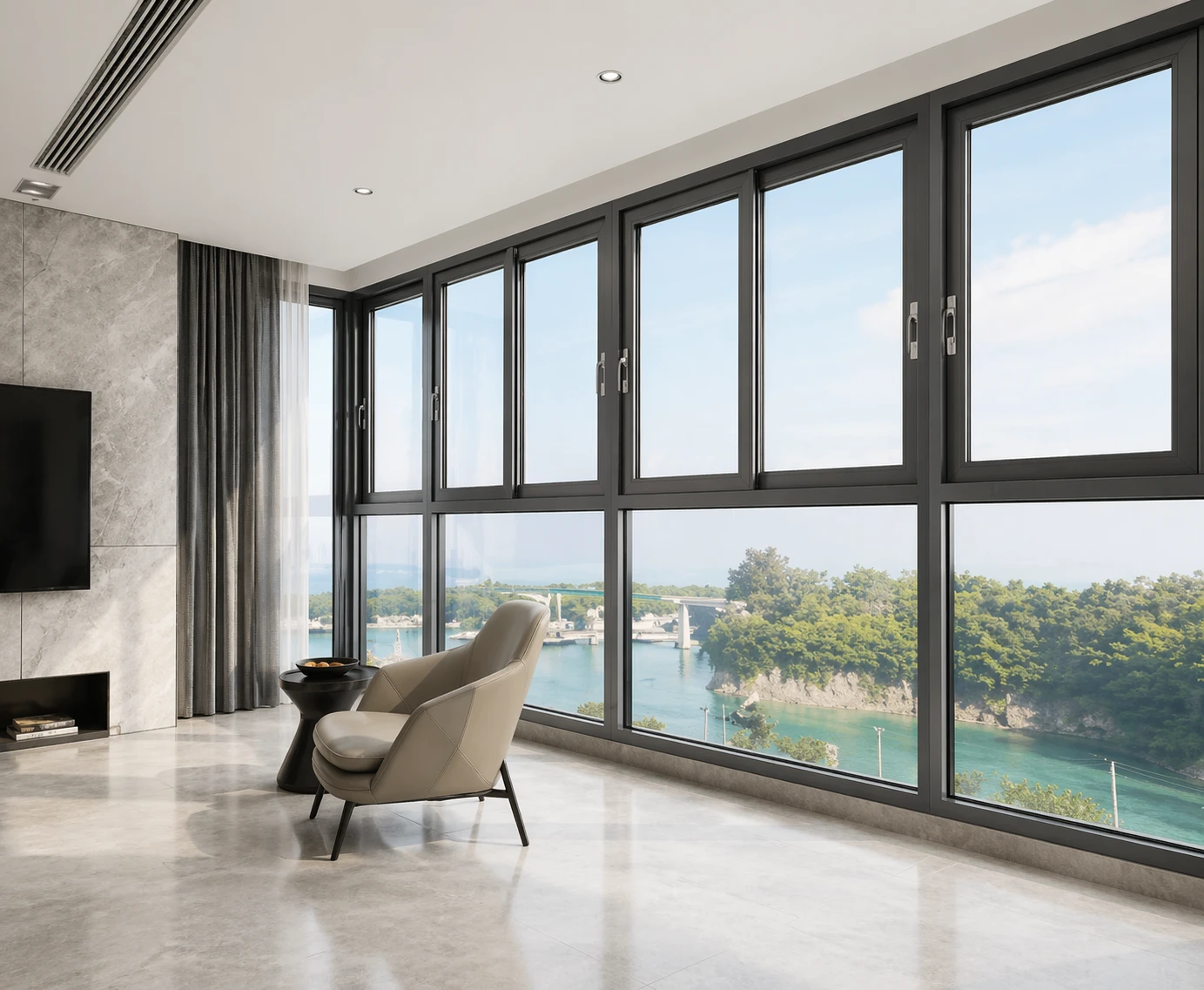
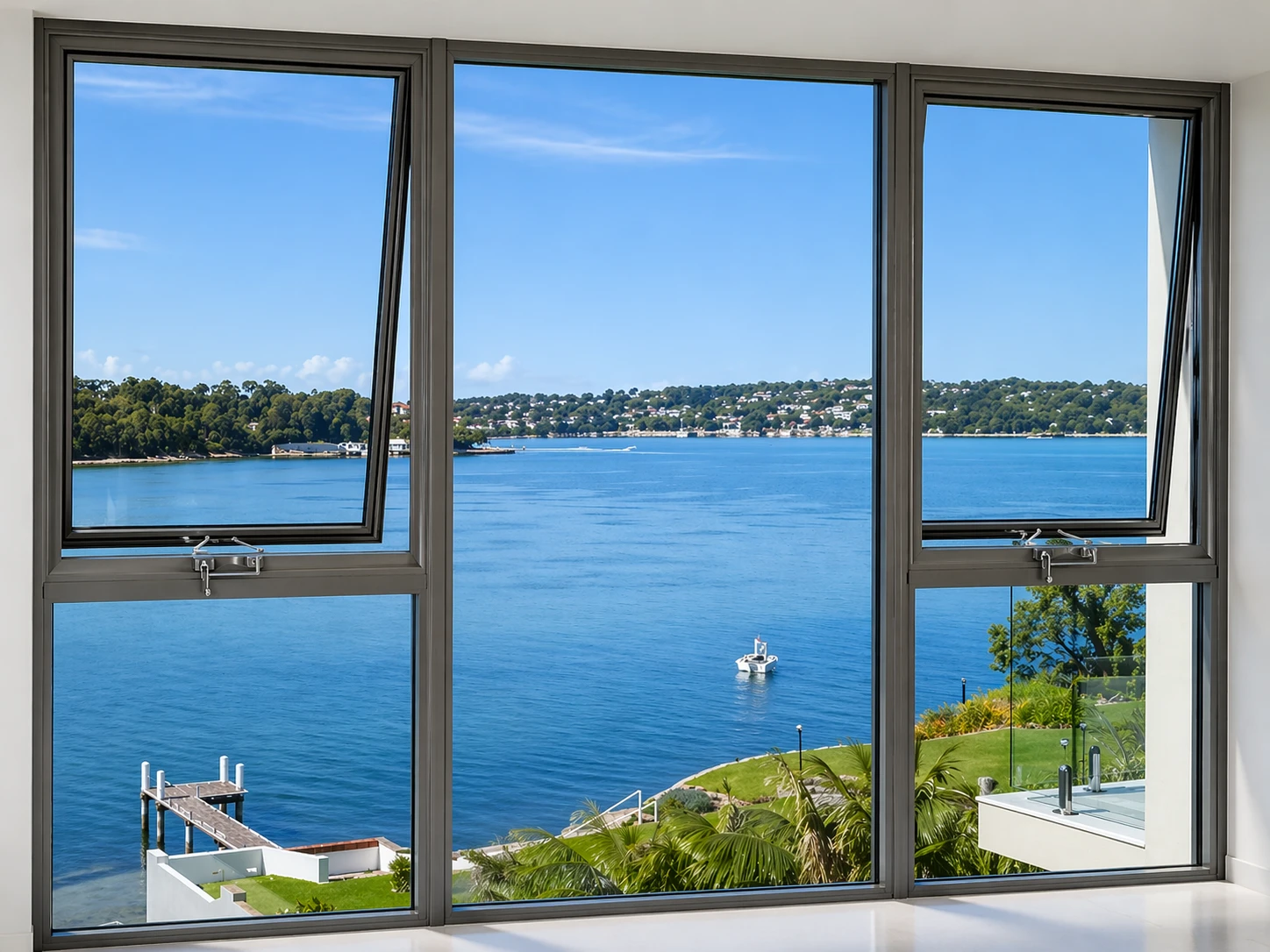
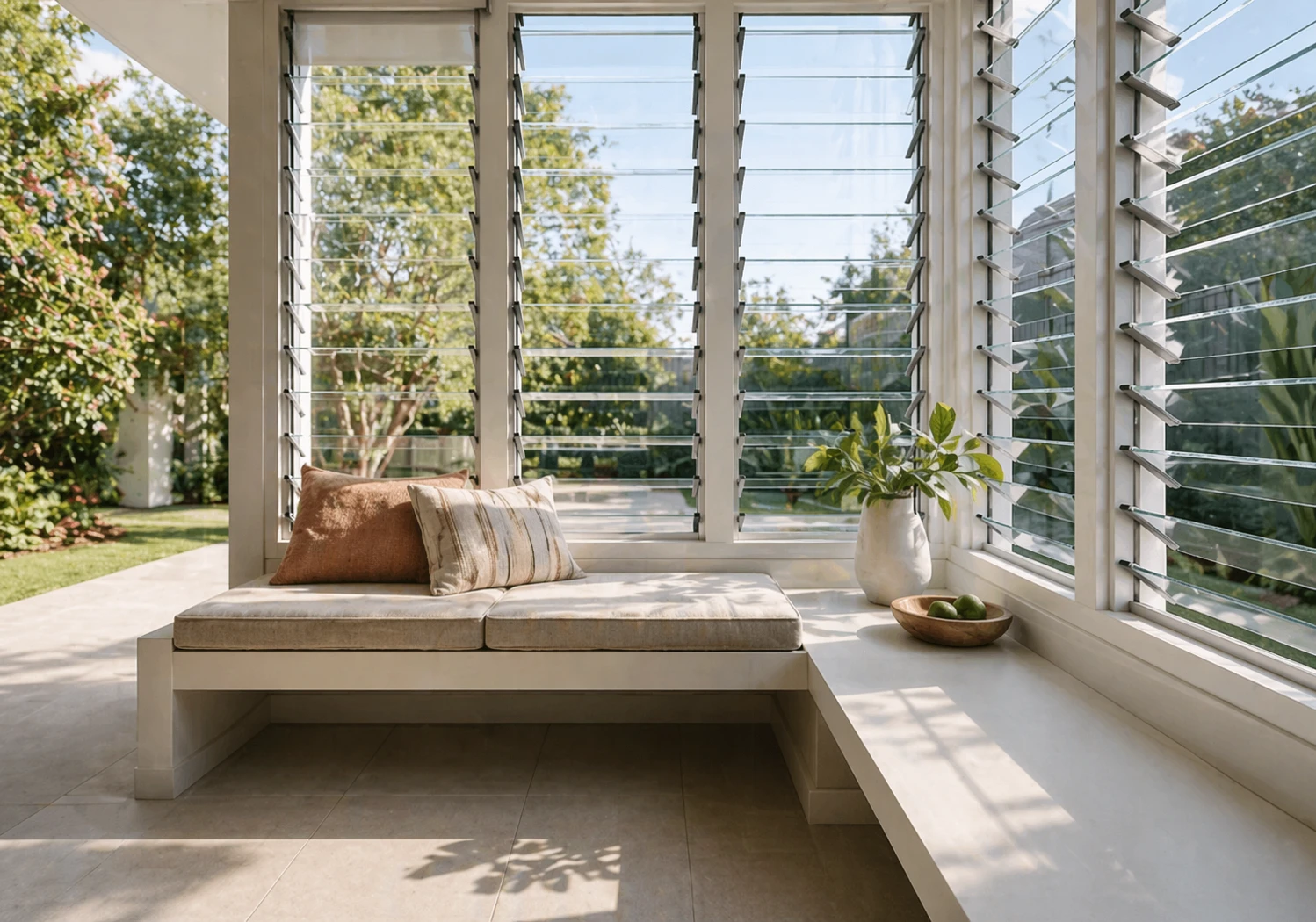
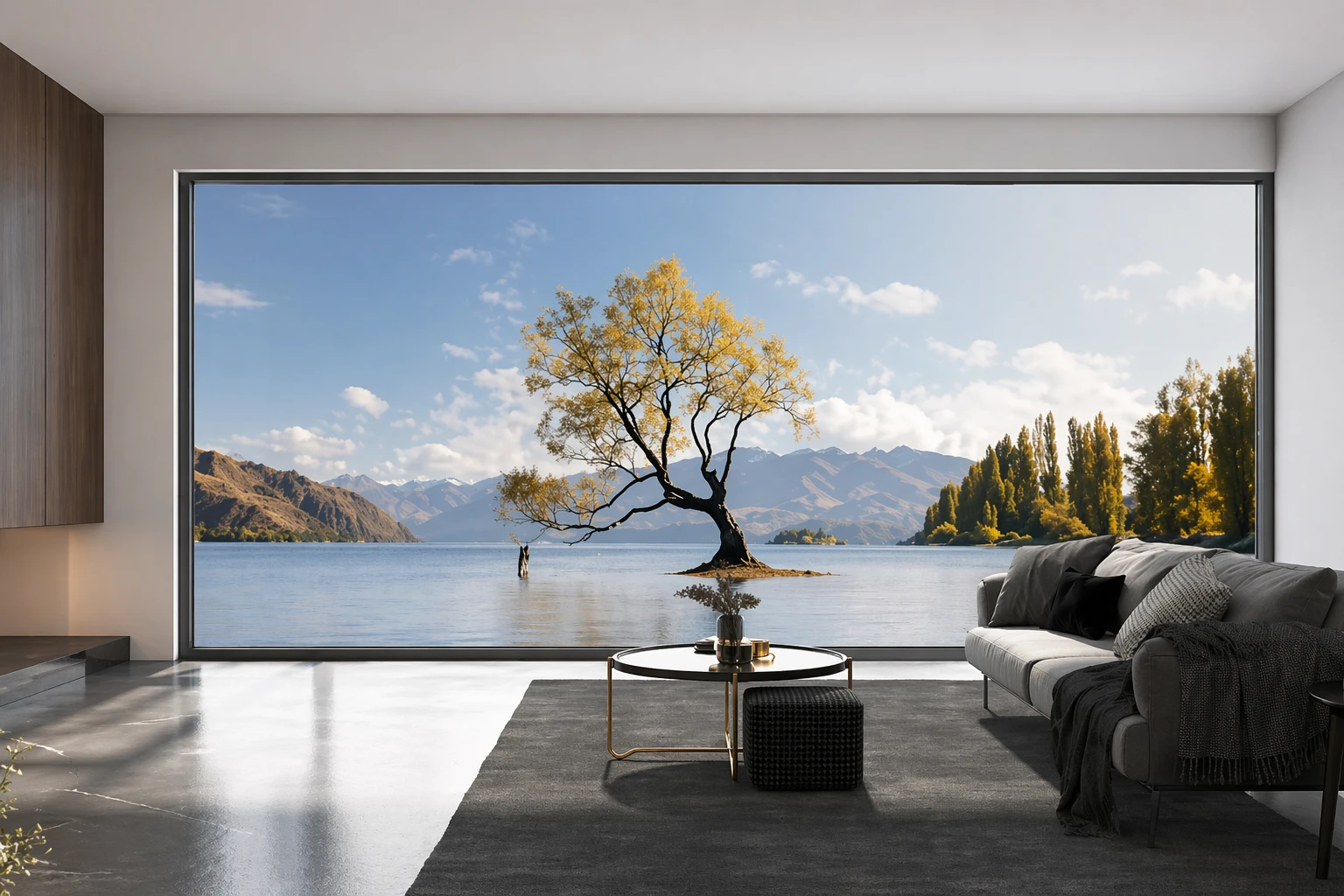
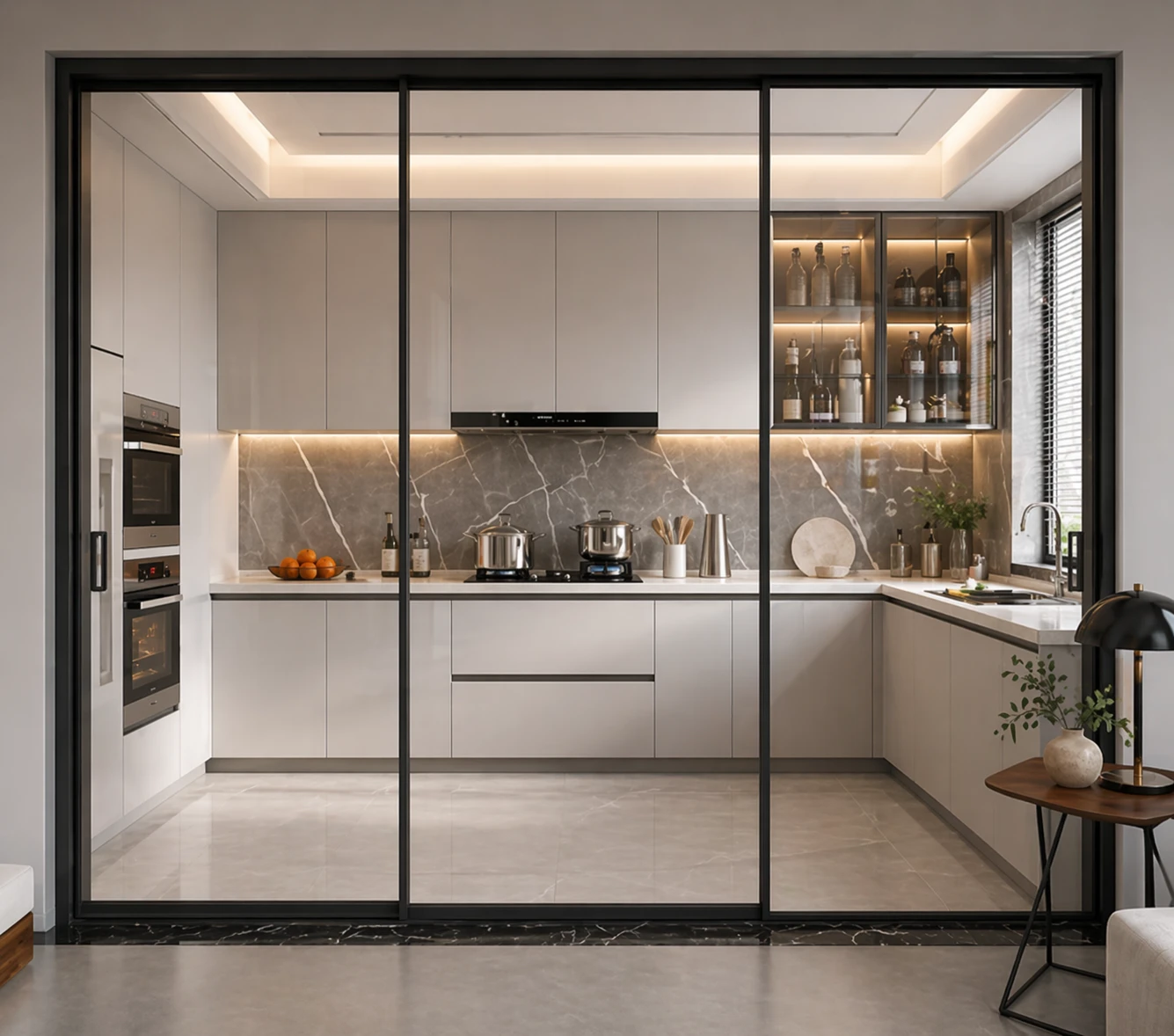
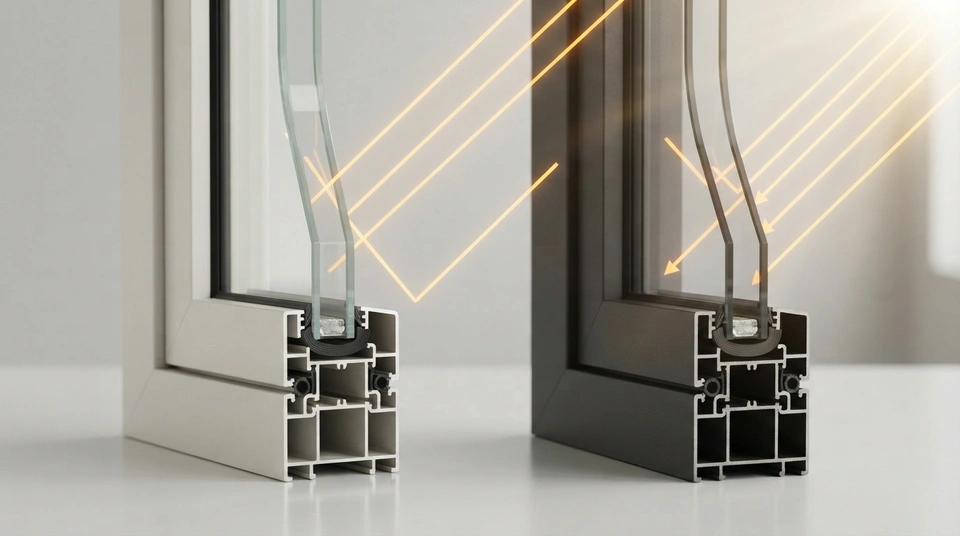
AI-generated illustrative image. Not a product test, certification record or project evidence.
Surfmist window frames keep Australian homes noticeably cooler than dark frames by reflecting approximately two-thirds of incoming solar radiation. In summer, unshaded aluminium frames in dark colours like Monument or Black reach surface temperatures of 60 to 75 degrees Celsius, conducting heat straight indoors. In contrast, Surfmist frames reflect 67 percent of solar radiation, staying close to ambient outdoor air temperatures. Choosing a light Surfmist finish eliminates a significant perimeter radiant heat source, reducing summer cooling loads across warm Australian climate zones.
Surfmist window frames keep Australian homes noticeably cooler than dark frames by reflecting approximately two-thirds of incoming solar radiation. In summer, unshaded aluminium frames finished in dark colours like Monument or Black absorb heavy solar radiation and can reach surface temperatures of 60 to 75 degrees Celsius, conducting unwanted heat straight into interior living spaces. In contrast, light-coloured window frames finished in a Surfmist powder coat stay substantially closer to ambient outdoor air. While frame colour only directly influences the perimeter fifteen to thirty percent of a window opening, choosing a highly reflective light finish eliminates an intense perimeter radiant heat source, significantly reducing cooling loads across warm Australian climate zones.
For many homeowners, selecting a window frame colour is treated as a cosmetic exterior choice. However, in building physics, exterior finishes act as thermodynamic boundaries. Standard aluminium extrusions have exceptionally high thermal conductivity, meaning heat absorbed on the outer profile rapidly travels through the metal into the home. Understanding how solar absorptance works, and how frame colour interacts with glazing and thermal breaks, allows renovators and home builders to make decisions that deliver both architectural appeal and tangible indoor comfort.
The Physics of Solar Absorptance on Aluminium Window Profiles
In building science, the thermal behaviour of an exterior finish is defined by its solar absorptance, expressed as a decimal value from zero to one. A solar absorptance of zero reflects all solar radiation, while a value of one absorbs all solar energy as heat. The lower the solar absorptance rating, the cooler the surface remains under direct Australian sunshine.
BlueScope publishes nominal solar absorptance data for its Colorbond steel range under Australian testing standards, specifically ASTM E 903-96. In its published technical data, Colorbond Surfmist in a Classic finish carries a nominal solar absorptance of 0.33 and a Solar Reflectance Index of 81. This means Surfmist reflects approximately sixty-seven percent of incoming solar energy and absorbs only thirty-three percent. By comparison, Colorbond Monument carries an absorptance of 0.73, absorbing seventy-three percent of solar radiation, while Night Sky absorbs ninety-six percent.
Homeowners reviewing Australian energy ratings sometimes notice that older reference tables and building code guidelines cited a solar absorptance of 0.32 for Surfmist, whereas current BlueScope Technical Bulletin TB 39 documentation specifies 0.33. This variation reflects updated testing protocols and product formulations published in August 2022. Both values place Surfmist securely within the National Construction Code Light classification, defined as any finish with a solar absorptance of 0.40 or lower.
Crucially, BlueScope publishes these figures for roll-formed steel products. Window frames are extruded aluminium profiles coated with architectural powder coats formulated by manufacturers like Dulux and Interpon to match Colorbond shades. While the exact solar absorptance of an aluminium profile depends on resin chemistry, gloss level, and pigment loading, high-grade architectural powder coats matched to Surfmist perform within the same Light thermal bracket, reflecting the vast majority of direct solar heat.
Surface Temperatures and Conductive Heat Transfer in Summer
Aluminium is an outstanding thermal conductor, with a conductivity rating of approximately 160 to 205 Watts per metre-Kelvin. Aluminium conducts heat hundreds of times faster than timber or insulated wall assemblies. Consequently, thermal energy absorbed on the exterior surface of an aluminium window travels almost instantaneously across the profile to the interior face.
On an Australian summer day with ambient temperatures of 35 to 40 degrees Celsius, intense solar radiation strikes unshaded facades. When this energy hits a dark Monument or Black frame, its high solar absorptance drives metal surface temperatures to 65 or 75 degrees Celsius. Touching an unshaded black aluminium frame on a January afternoon in western Sydney, Perth, or Brisbane reveals how dangerously hot dark metal becomes.
In standard non-thermally broken windows, this heat conducts straight through the solid metal extrusion to the interior reveal and sill. The overheated interior aluminium then acts as a perimeter radiant heater, continually warming the adjoining room. Even with air conditioning operating, occupants seated near the window experience uncomfortable radiant heat from the blazing frame.
Conversely, an aluminium window frame finished in Surfmist reflects roughly two-thirds of that incoming solar radiation. Under identical sunlight, a Surfmist frame typically reaches surface temperatures only a few degrees above ambient outdoor air, rarely exceeding 42 to 46 degrees Celsius. Because the exterior metal absorbs far less heat, conductive transfer through the profile drops dramatically, keeping indoor surfaces near room temperature and eliminating perimeter hot spots.
Frame versus Glass: Putting Total Window Performance in Perspective
To set realistic expectations, homeowners must weigh the proportional relationship between the window frame and the glass. In typical residential windows, the frame accounts for roughly fifteen to thirty percent of the total opening area, with glass comprising the remaining seventy to eighty-five percent. Because the glazed area represents the bulk of the surface, it remains the primary driver of overall window thermal performance.
Specifying Surfmist window frames cannot overcome poor glazing. If a large western window uses standard clear single glass, radiant heat will overwhelm the room regardless of frame colour. The solar heat gain coefficient of the glass dictates the direct solar radiation entering through the pane. High-performance glazing, such as double-glazed units with low-emissivity coatings, remains the essential foundation for whole-home comfort.
However, once quality double glazing is installed, the frame becomes the dominant thermal weak point across the wall opening. With double glazing preventing heat transfer through the centre of the glass, an overheated dark aluminium frame acts as an uninsulated metal bridge around the perimeter. Specifying Surfmist eliminates this perimeter weakness, pairing low-emissivity glazing with a highly reflective frame to achieve balanced resistance against solar heat gain.
The Role of Thermal Breaks: Decoupling Colour from Heat Transfer
For homeowners who favour the architectural contrast of dark frames but demand superior energy efficiency, thermally broken aluminium systems offer the ideal solution. In a standard window, the extrusion is a continuous metal bridge. In a thermally broken window, the profile is split into separate exterior and interior sections joined by an engineered, low-conductivity polyamide insulating strip.
This polyamide barrier halts conductive heat transfer. Heat absorbed on the dark exterior profile is blocked at the break, preventing it from transferring to the interior frame. As a result, homeowners can specify dark Monument or Black on the exterior while the interior frame remains completely isolated and cool to the touch. Thermally broken profiles completely decouple exterior colour choice from interior thermal comfort.
Thermally broken engineering also enables dual-colour powder coating, allowing an architectural dark finish outside and a light finish inside to match interior decor. For projects where standard non-thermally broken frames are specified for cost reasons, choosing a light exterior finish like Surfmist remains the most practical and economical method to curb conductive frame heat.
Australian Climate Zones: Where Surfmist Frames Deliver the Highest Benefit
The thermal advantage of Surfmist window frames depends directly on Australian climate zones and whether household energy demands are dominated by cooling or heating needs.
In cooling-dominated regions—such as Climate Zone 1 in Darwin, Climate Zone 2 in Brisbane and the Gold Coast, and Climate Zone 5 in coastal Perth and warm coastal New South Wales—air conditioning loads dominate energy consumption. Here, solar heat absorbed by building frames is purely parasitic, forcing cooling units to work harder. In these regions, Surfmist window frames provide an immediate operational benefit, repelling summer heat and helping homes meet seven-star NatHERS cooling load caps.
In hot inland zones such as western Sydney, the Hunter Valley, and regional Queensland, summer daytime temperatures frequently exceed 40 degrees Celsius. On unshaded northern and western elevations, dark frames impose severe cooling penalties. Specifying Surfmist on these facades noticeably flattens the late-afternoon thermal spike, keeping bedrooms and living areas more comfortable.
In heating-dominated southern climates like Melbourne, Canberra, and Hobart (Climate Zones 6 and 7), winter heating is the primary energy concern. While dark frames absorb some winter solar heat, they provide no insulation against cold winter nights and still risk overheating unshaded west-facing rooms in summer. Southern designers increasingly choose light or mid-tone frames paired with high-performance double glazing for balanced year-round performance.
Frequently Asked Questions
How hot do dark aluminium window frames get compared to Surfmist frames in direct sunlight?
On a 35-degree summer day under direct sun, dark aluminium frames finished in Monument or Black regularly reach surface temperatures between 60 and 75 degrees Celsius, making them uncomfortably hot to touch. In contrast, light Surfmist aluminium frames reflect roughly two-thirds of solar radiation and typically reach surface temperatures of 40 to 46 degrees Celsius, remaining substantially closer to outdoor air temperatures.
Does choosing Surfmist window frames improve a home's NatHERS star rating?
Yes. In NatHERS energy rating software such as FirstRate5 and HERO, window frame colour is an active thermodynamic variable categorised into Light, Medium, and Dark absorptance brackets. In cooling-dominated Australian climates, changing dark frames to light frames like Surfmist reduces calculated cooling loads and can improve a dwelling's rating by 0.1 to 0.3 stars, often helping marginal designs secure mandatory seven-star certification.
Can you have dark window frames on the outside and light frames on the inside to reduce heat?
In standard non-thermally broken windows, the interior and exterior frames are a single extrusion and must share the same colour. However, in thermally broken systems, interior and exterior aluminium sections are manufactured separately before being joined to a polyamide barrier. This allows dual-colour powder coating, giving you an architectural dark finish outside while the thermal break stops exterior heat from reaching the light interior frame.
If I have double-glazed windows, does the frame colour still matter for heat gain?
Yes. Double glazing dramatically reduces heat transfer through the glass, but standard aluminium frames remain highly conductive metal perimeters. In a non-thermally broken double-glazed window with dark frames, the glass stays cool while the hot aluminium perimeter continues radiating solar heat indoors. Pairing double glazing with light Surfmist frames ensures balanced thermal performance across the entire window.
Is powder-coated Surfmist aluminium identical in thermal performance to Colorbond Surfmist steel?
Both finishes share the same nominal colour tone, but BlueScope publishes nominal solar absorptance data (0.33 SA, 81 SRI) specifically for roll-formed Colorbond steel. Window frames are finished with architectural powder coats formulated to match Colorbond shades. While minor variations in resin chemistry exist, high-performance architectural powder coats matched to Surfmist perform consistently within the building code's Light classification with a solar absorptance of 0.40 or lower.
Practical Takeaways for Your Window Schedule
When finalising window selections for an Australian build or renovation, treating frame colour as a functional thermal component pays dividends in long-term comfort and energy savings. On unshaded western and northern elevations, particularly across Queensland, Western Australia, and inland New South Wales, specifying Surfmist frames provides an immediate, low-cost thermal safeguard against intense summer heat.
At SMIRO, our residential and commercial aluminium window and door systems are available in an extensive range of premium architectural powder-coat finishes, including popular Colorbond-matched shades like Surfmist, Monument, and Pearl White. For projects requiring dark architectural exterior aesthetics without sacrificing energy efficiency, our engineered thermally broken aluminium systems isolate exterior heat completely, ensuring your home stays cool, quiet, and effortlessly comfortable across every Australian season.