Glass & Glazing
Does double glazing keep heat out in summer?
By Sheng Xu · 4 October 2026
AI-generated illustrative image. Not a product test, certification record or project evidence.
Yes, double glazing keeps conducted ambient heat out during summer, but standard clear double glazing does not stop direct radiant sunlight on its own. While double glazing cuts conductive heat transfer by over 50% (insulating against hot 40°C outside air), clear double glazing allows up to 77% of direct solar radiation (SHGC 0.70–0.77) to pass inside. Once solar heat enters, the insulating glass traps it indoors, creating a greenhouse effect. To effectively block summer heat in Australian homes, double glazing must be paired with a solar-control Low-E coating, tinted glass, or proper external architectural shading.
One of the most persistent complaints on Australian home renovation forums reads something like this: 'We spent thousands upgrading to double glazed windows, but on hot summer afternoons our living room feels like a sauna.' The disappointment is understandable, but the issue is rarely a defective window. It is a fundamental misunderstanding of fenestration thermodynamics: the critical difference between conductive heat transfer and radiant solar heat gain.
Yes, double glazing keeps heat out in summer—provided the heat in question is ambient conductive heat. An Insulated Glass Unit (IGU) acts as a powerful thermal insulator, preventing hot 40°C outdoor air from conducting across the glass and into your air-conditioned home. However, standard clear double glazing is largely transparent to direct radiant sunlight. Understanding why clear double glazing can trap heat—and how specifying solar-control Low-E coatings and external shading solves it—is essential for creating a comfortable Australian home.
Conduction vs. radiation: the two ways summer heat enters
Heat enters your home during an Australian heatwave through two distinct physical mechanisms, governed by two separate performance metrics:
1. Conductive Heat Transfer (Governed by U-value): Conduction occurs when heat moves through a solid material from a warmer zone to a cooler zone. On a 40°C afternoon when your interior air conditioning is set to 23°C, heat naturally tries to conduct across the window envelope. A single-glazed window allows this heat to conduct straight inside (Uw ~6.5 W/m²K). Double glazing incorporates an argon gas barrier that slows conduction by over 50% (Uw ~2.5–3.0 W/m²K), keeping your indoor cooled air insulated.
2. Radiant Solar Heat Gain (Governed by SHGC): Radiant heat is not ambient air temperature; it is pure electromagnetic radiation emitted directly by the sun. On a clear Australian summer day, unshaded solar radiation delivers over 750 watts of direct radiant energy per square metre of glass. The metric measuring this is the Solar Heat Gain Coefficient (SHGC), expressed from 0 to 1. Standard clear double glazing has an SHGC of 0.70 to 0.77—meaning it allows up to 77% of raw radiant solar heat to pass straight through the glass.
If a window has an excellent low U-value but a high SHGC, it will successfully block hot ambient air while simultaneously allowing hundreds of watts of direct radiant solar energy into your living room.
The Australian "greenhouse trap": why rooms can feel like saunas
When unshaded clear double glazing is exposed to intense afternoon sun, it triggers the classic greenhouse effect:
Step 1: Short-wave solar radiation easily penetrates both panes of clear glass into the room.
Step 2: This solar energy strikes interior surfaces—dark timber floorboards, tiled slabs, rugs, and furniture. These surfaces absorb the radiation, heat up, and re-radiate that thermal energy back into the room as long-wave infrared heat.
Step 3: The double glazed IGU, which is engineered specifically to prevent long-wave heat from escaping, blocks this heat from radiating back outside. The argon cavity traps the heat indoors.
On an older single-glazed window, some of that absorbed indoor heat conducts back out through the thin glass as the outdoor evening cools down. On an unshaded double glazed window, the heat remains locked inside overnight, forcing air conditioners to work twice as hard. The problem is not the double glazing; it is specifying clear glass without solar control on an exposed elevation.
The Low-E solution: Surface #2 solar-control coatings
The engineering solution to the summer greenhouse trap is combining double glazing with a spectrally selective low-emissivity (Low-E) coating.
In a double-glazed IGU, there are four glass surfaces, numbered from the outside in (Surface #1 is the outdoor face; Surface #2 is the inner face of the outer pane; Surface #3 is the outer face of the inner pane; Surface #4 is the room-side face). For summer cooling in Australian climates, solar-control Low-E coatings are applied to Surface #2.
When direct sunlight strikes Surface #2, the microscopic metallic coating acts like an optical filter: it reflects the invisible infrared solar spectrum back into the atmosphere before that heat can cross the argon cavity, while allowing visible light to pass through. This drops the window's SHGC from 0.74 down to between 0.25 and 0.35, blocking up to 75% of radiant summer heat while preserving high natural daylight (Visible Light Transmittance / VLT > 65%).
External shading: the first line of defence
Australian building science manuals (YourHome, AGWA) emphasize a fundamental rule: stopping the sun before it hits the glass is always more effective than asking the glass to fight direct summer radiation.
Appropriately sized roof eaves, pergolas, external louvres, and canvas drop awnings can block up to 85% of solar radiation during peak summer months. By contrast, internal blinds or curtains only intercept the sun *after* it has already passed through the glass; the blinds heat up and radiate warmth into the room. Pairing properly designed external shading with double glazing delivers the ultimate summer cooling performance.
The fixed window vulnerability: managing large glass apertures
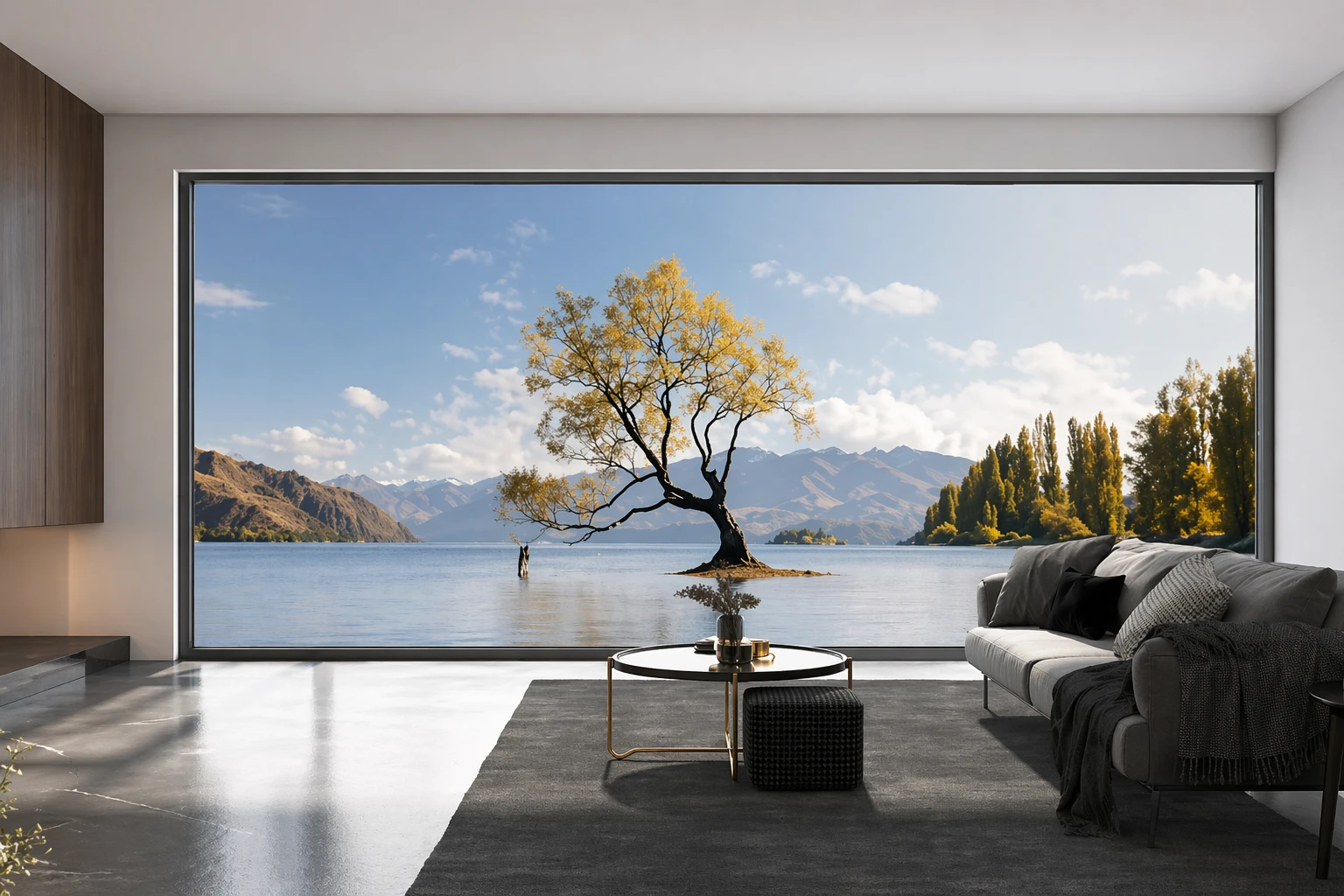
Because fixed aluminium windows (picture windows) are designed to maximize unobstructed views and natural daylight, glass accounts for 80% to 85% of the total wall opening. This makes fixed windows the most critical glazing style to tune for solar orientation.
A large 2400mm x 1800mm fixed picture window on an unshaded western facade represents over 4.3 square metres of glass. If glazed in standard clear double glazing, it can admit over 3,000 watts of radiant heat during a 4 PM summer heatwave—equivalent to running three 1,000-watt fan heaters inside your room.
However, when specified with high-performance solar-control Low-E and appropriate SHGC tuning (0.28 to 0.38), double glazed aluminium fixed windows allow expansive panoramic views and abundant natural light without overwhelming your air-conditioning capacity.
Orientation strategy: tuning glass by elevation
To achieve optimal year-round comfort under Australia's NCC 2022 standards, tailor your double glazing specifications according to facade orientation:
• West & East Elevations: Experience intense, low-angle morning and late afternoon sun where standard horizontal eaves provide zero shade. These elevations demand low SHGC (<0.32) solar-control double glazing or external vertical louvres to prevent severe summer overheating.
• North Elevations: The summer sun is high in the sky and easily blocked by designed roof eaves, while the low winter sun provides valuable passive heating. North-facing glass benefits from moderate-to-high SHGC (0.45 to 0.60) paired with a low U-value to harvest free winter warmth while remaining shaded in summer.
• South Elevations: Receive zero direct summer sunlight in southern Australia. Here, solar heat gain is not an issue; the primary specification focus is achieving the lowest possible U-value (Uw) to prevent winter heat escape.
Frequently asked questions
Why does my double glazed room feel hotter than a single glazed room in summer?
If clear double glazing without a Low-E coating is exposed to unshaded sun, radiant solar heat passes inside and cannot easily conduct back out through the insulating unit, creating a greenhouse effect. Older single-glazed windows allow heat to escape more readily overnight through thin glass. Specifying solar-control Low-E resolves this issue completely.
Can I add window film to existing double glazing to stop summer heat?
Yes, but caution is required. Applying standard dark aftermarket film to the interior face of a double glazed unit can cause excessive heat absorption in the glass, increasing thermal stress and risking glass fracture. Always consult a licensed glazier to ensure any retrofitted solar-control film is certified as IGU-safe.
What SHGC rating should I look for in Australian double glazed windows?
For hot climates (Queensland, WA, NT) and west-facing elevations across Australia, target an SHGC between 0.25 and 0.35. For cool southern climates (Melbourne, Tasmania, Canberra) on north-facing elevations with eaves, an SHGC between 0.45 and 0.60 allows beneficial winter passive solar heating.