Glass Options
What is Low-E glass?
By Sheng Xu · 9 August 2026
AI-generated illustrative image. Not a product test, certification record or project evidence.
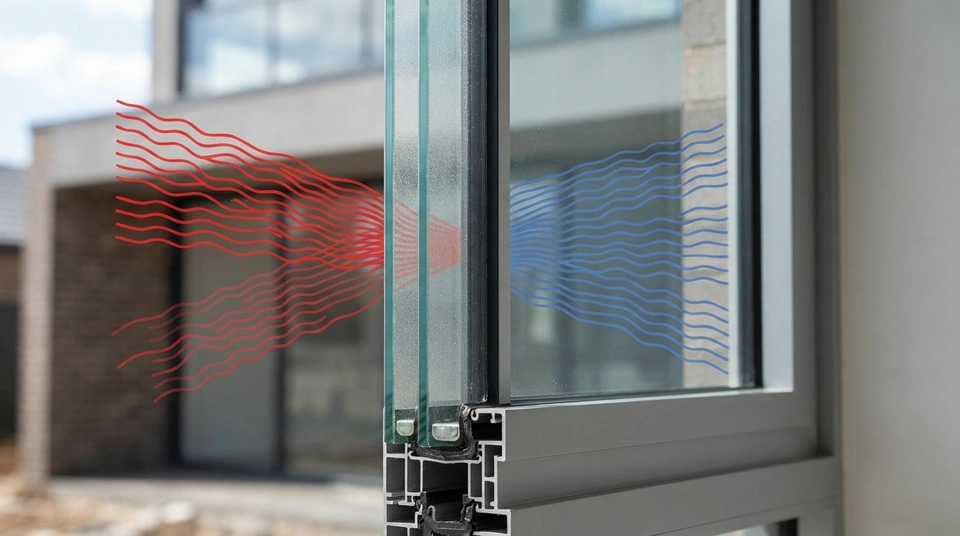
Low-E (low-emissivity) glass has a microscopically thin, virtually clear coating that reflects infrared heat back into a room in winter and blocks solar heat in summer. It is the most cost-effective single upgrade to a window's thermal performance, and paired with double glazing it can cut heating and cooling bills by hundreds of dollars a year in cool Australian climates.
Low-E glass is the cheapest performance upgrade you can make to a window, but the savings claims around it are all over the place. This guide pulls together the numbers Australian homeowners can actually work with: what the government agencies say, what installers admit, what a 7-star energy assessment really costs by city, and what measured retrofits delivered. The short version, up front: low-e glass saves real money in cool and temperate climates, is a smaller win in the tropics, and should never be the first upgrade in a draughty, poorly insulated home.
How Much Can Low-E Glass Actually Save on Australian Energy Bills?
The headline numbers come from YourHome, the federal government's passive-design guide: up to 40 per cent of a home's heating energy is lost through windows, and up to 87 per cent of summer heat gain enters through them. The up-to matters. These are worst-case figures for a poorly performing single-glazed window, not what every home loses. But they explain why windows, a small fraction of a wall, dominate a heating and cooling budget.
The NSW Government's energy agency puts the practical saving at $500 or more a year on heating and cooling bills for a home that upgrades to double glazing with a low-e coating, depending on the home. A Melbourne installer, APS, breaks the arithmetic down further: a typical Melbourne home spending $2,000 a year on heating carries roughly $500 to $800 of that through its glazing, and quality double glazing with low-e cuts that share by 50 to 70 per cent, worth $250 to $560 a year. Treat the installer figure as a vendor estimate, but the direction matches the government numbers.
At national scale the numbers stay meaningful. Research by Simko and Moore, cited in Sustainability Victoria's glazing report, calculates that switching every Australian home to low-e double glazing would cut the country's total annual energy need by 0.5 per cent, about 32 petajoules. Windows sit behind roughly 1.5 per cent of Australia's total energy consumption, so glazing is a genuine national lever, not just a household one.
What Is Low-E Glass and How Does It Save Energy?
Low-E, short for low emissivity, is a microscopically thin, virtually clear coating applied to a glass surface. The coating reflects long-wave infrared radiation, which is what carries heat, while letting visible light pass through. In winter it reflects the room's heat back inside. In summer it reflects solar heat before it reaches the interior. The NSW Government describes it as a heat shield on the glass.
The coating comes in two families, and the distinction decides whether the product suits your climate. High-transmission low-e lets winter sunlight through for passive solar gain while trapping the room's heat, which suits cool climates. Low-transmission low-e blocks solar heat gain while still admitting light, which suits hot climates. YourHome warns that coatings specified the wrong way either deteriorate or fail to perform, and the wrong family on the wrong elevation can cut the winter sun you actually wanted.
How to read a WERS rating
Australian windows are rated under the Window Energy Rating Scheme, or WERS, run by the Australian Glass and Window Association. The certificate carries two numbers. U-value measures heat transfer through the whole window, where lower is better. SHGC, the solar heat gain coefficient, measures how much of the sun's heat passes through, a number between 0 and 1 that should be tuned to your climate. WERS adds a star rating for heating and cooling performance. YourHome's caution: insist the values are AFRC-approved, because NFRC or overseas ratings are not always comparable and can overstate performance.
Does Your Climate Zone Change the Answer?
Yes, decisively. The case for low-e glass is strongest in Melbourne, Hobart, Canberra and the cooler temperate south, and weakest in Brisbane, Darwin and the tropics, where the premium may never be recovered on energy savings alone. This is the climate-zone truth that most vendor pages bury, and it is the single most useful fact in this article.
In cool climates the U-value is the driver. Heat loss is the problem, so a low U-value plus a high-transmission low-e coating on north glass, and low-e double glazing on south and west, is what accredited assessors actually specify. In hot climates SHGC dominates. YourHome's guidance for Darwin and Brisbane north is a low SHGC with little room for compromise, meaning low-transmission low-e, tinted glass or a tinted insulated unit, and external shading often beats spending on glazing at all.
In the temperate middle, Sydney, Perth and Adelaide, the answer is mid-range: tune SHGC by elevation and accept that the energy payback is slower. As one architect put it, if someone quotes you a payback period calculated for a cold climate, it does not transfer. The spread of real 7-star compliance costs shows the same pattern. Owner-builders reporting on Building Forums Australia in July 2026 landed at under $2,000 extra in Brisbane and Fremantle, about $6,800 in Adelaide, $7,200 in Hobart and $11,000 in Melbourne, with glazing the largest line item in every case.
Low-E Single Glazing vs Double Glazing: Which Saves More?
Double glazing wins on U-value every time, and low-e on top of double glazing wins again. But low-e single glazing is a genuine budget middle path, not a gimmick. The YourHome window ladder shows why. A standard aluminium single-glazed window sits at a whole-window U-value around 6.9. Double glazing in the same aluminium frame drops it to about 4.2. Timber or uPVC double glazing reaches about 3.0. A triple-glazed low-e unit with argon gets near 1.0. Each step roughly halves the heat loss.
Frames are half the story. Plain aluminium conducts heat brilliantly, which is why thermally broken aluminium, uPVC or timber frames matter as much as the glass. A cheap double-glazed unit in an unbroken aluminium frame leaks heat around the glass through the frame.
The comparison that still confuses buyers is whether low-e beats double glazing. It does not. They solve different problems. Low-e addresses radiant heat transfer. The sealed air or gas gap in double glazing addresses conduction. The Australian Window Association's position, echoed by the retrofit installer Magnetite, is that low-e is better than clear glass but not better than double glazing. The two work together, and the best numbers come from combining them.
Victoria has a specific trap. Sustainability Victoria advises that using low-e to control heat gain is not recommended in Victorian conditions, because it also cuts the winter solar gain those homes rely on. In Melbourne, specify high-transmission low-e, and reserve low-transmission low-e for elevations where you deliberately want less summer gain.
What Does It Cost and What Is the Real Payback?
Budget $600 to $2,000 or more per window, installed, for double glazing with a low-e coating, per the NSW Government. The low-e coating itself is a modest increment on top of the unit. Melbourne installer APS puts double glazing 30 to 80 per cent above single glazing, and estimates an 8 to 15 year payback in Melbourne, stretching to 15 to 20 years in milder climates. Treat those as vendor estimates.
The honest caveat: in mild or warm climates the energy savings may never fully recoup the premium, particularly if your single glazing is still serviceable. And there is no government carrot. As of 2026 there is no NSW or Australian Government rebate for double glazing or low-e windows, so the decision is a straight private-cost calculation.
What changes the math is the returns that never appear on an energy bill. YourHome notes that better glazing cuts the peak heating and cooling load, letting you spec an air conditioner around 30 per cent smaller, money that comes straight back out of the mechanical budget. Efficient glazing also stops condensation and mould near cold glass, cuts outside noise, and carries a resale premium. Cotality's Watt's it Worth report found each additional energy star adds a median 1.3 per cent, about $10,560, to an Australian home's value. Treat the resale figure as a report finding, not a guarantee.
When Is Low-E Glass NOT the First Upgrade to Buy?
If your home is poorly insulated and draughty, glazing is the last upgrade, not the first. SBS pathway modelling, UTS research on older homes, architect advice and installer guidance all converge on the same order: seal the draughts, insulate the ceiling, shade the western glass, and only then spend on windows.
The proof point is stark. In the Northcote retrofit documented by One Step Off The Grid, draught-sealing plus a single efficient split-system air conditioner cut the home's electricity use 44 per cent before any window was touched. On older homes, UTS found only 40 per cent of windows were sealed at all, so the leaks around the window often cost more than the glass itself.
There is also a warning from inside the industry. An accredited energy assessor on the HomeOne forum cautioned that the easiest option for assessors is to throw your money at the problem, meaning reflexive thermally broken everything specifications. Find an assessor who optimises your actual house.
Cheaper middle paths exist before replacement: heavy curtains with sealed pelmets, double-cell honeycomb blinds, window film for summer, and secondary glazing, the Magnetite-style retrofit panel, which captures a real slice of the double-glazing benefit at a fraction of the cost. Glazing jumps the queue only for a serious noise problem, persistent condensation and mould, cold south-facing rooms, or windows already due for replacement.
New Build vs Retrofit: How 7-Star Rules Change the Equation
Under NCC 2022 the 7-star NatHERS minimum turned glazing from a comfort question into a compliance question. What assessors actually specify is narrower than the marketing suggests: low-e double glazing on the south and west elevations only, a higher R-value ceiling, and a lighter roof colour, not a whole house of premium glass. The July 2026 Building Forums thread on real compliance costs shows the variation, from under $2,000 in Brisbane to $11,000 in Melbourne, and it is almost entirely glazing.
The quiet lever is the whole-of-home budget. Appliance choices count in the score, and two owners reported swapping a gas cooktop to induction to avoid upsizing west-facing windows. One Hobart build moved from about $7,200 to $5,500 on the strength of that single change. The mechanism is real and almost nobody writes about it.
Design still does most of the work. Orientation, eaves and window sizing matter more than any product. AGWA found windows in 7-star homes average about 15 per cent smaller than at 6-star, because designers shrink the glass instead of paying for better glass.
Retrofit reality cuts the other way. When windows are being replaced anyway, the premium over single glazing is at its smallest, and low-e double glazing is a near-free choice in the budget. As a standalone energy retrofit it is usually the last upgrade, not the first. On a new build, get the glazing specification into the base design before quoting. As the Glenrock Gardens builder put it in the Canberra Times, to retrofit later costs an absolute fortune.
Real Australian Homes: Before-and-After Numbers
Modelled savings are one thing; measured retrofits are another. The best documented Australian cases are whole-envelope jobs, so glazing never acts alone, but the results show what the technology is capable of when the rest of the home cooperates.
A bayside Melbourne renovation documented by Renew magazine replaced all single glazing with double glazing in thermally improved frames, added insulation and draught sealing, and cut daily energy use from 36 kWh to 10 kWh, lifting its scorecard from 1 star to 7 stars. Two inner-Melbourne villas profiled by One Step Off The Grid moved from 4.2 to 8.1 stars for about $17,000 and from 2.2 to 7.1 stars for about $22,000, the second with uPVC frames and low-e throughout. Both owners described comfort, mould and noise gains as bigger than the bill savings.
A 1930s Coburg bungalow on Sustainable House Day 2026 combined Thermawood retrofit double glazing with draught-proofing and ceiling insulation, then went off gas, landing at net energy bills of minus $1,026 a year. Its owner named the retrofitted glazing the single biggest improvement to comfort and noise. And the Melbourne electrification case documented by Tim Forcey, after insulation, double glazing, draught-proofing and efficient appliances, runs heating and cooling on under $150 a year.
Frequently Asked Questions
Is Low-E glass worth it in Australia?
Yes in cool and temperate climates with real heating loads, where the payback runs 8 to 15 years and comfort, condensation and resale add to the energy savings. In tropical and warm climates the energy case is marginal, and the purchase usually has to be justified on comfort, noise and mould rather than payback.
Is Low-E glass better than double glazing?
No. They solve different problems. Low-e is a coating that reduces radiant heat transfer; double glazing is a construction that reduces conductive heat loss. Low-e on top of double glazing outperforms either alone. Low-e single glazing is a budget step up from clear glass, nothing more.
Does Low-E glass block winter sun?
Low-transmission low-e does, which is a problem on north-facing windows in southern states. Specify high-transmission low-e there instead. Sustainability Victoria is explicit that using low-e for heat-gain control in Victoria cuts the winter solar gain those homes rely on.
How much does Low-E glass cost in Australia?
The coating is a modest increment on a double-glazed unit. Full double glazing with low-e runs about $600 to $2,000 or more per window installed, and typically 30 to 80 per cent above single glazing, depending on frame and specification.
Are there rebates for energy-efficient windows in Australia?
No federal or NSW rebate existed as of 2026, and no Australian Government incentive covered double glazing. Check your state at the time of purchase, because state programs change.
Low-e glass saves real money, but only in the right climate and only after the basics are done. In Melbourne, Hobart and Canberra it is the difference between a window that leaks heat and one that pays you back. In Brisbane and Darwin it is often the wrong first spend, beaten by shading. On retrofits, seal and insulate first. On new builds, put low-e double glazing into the design before you quote, because retrofit costs far more. And always ask for the WERS certificate, so you are comparing the same two numbers, U-value and SHGC, before you sign anything.