Glass & Glazing
Does double glazing reduce noise?
By Sheng Xu · 4 October 2026
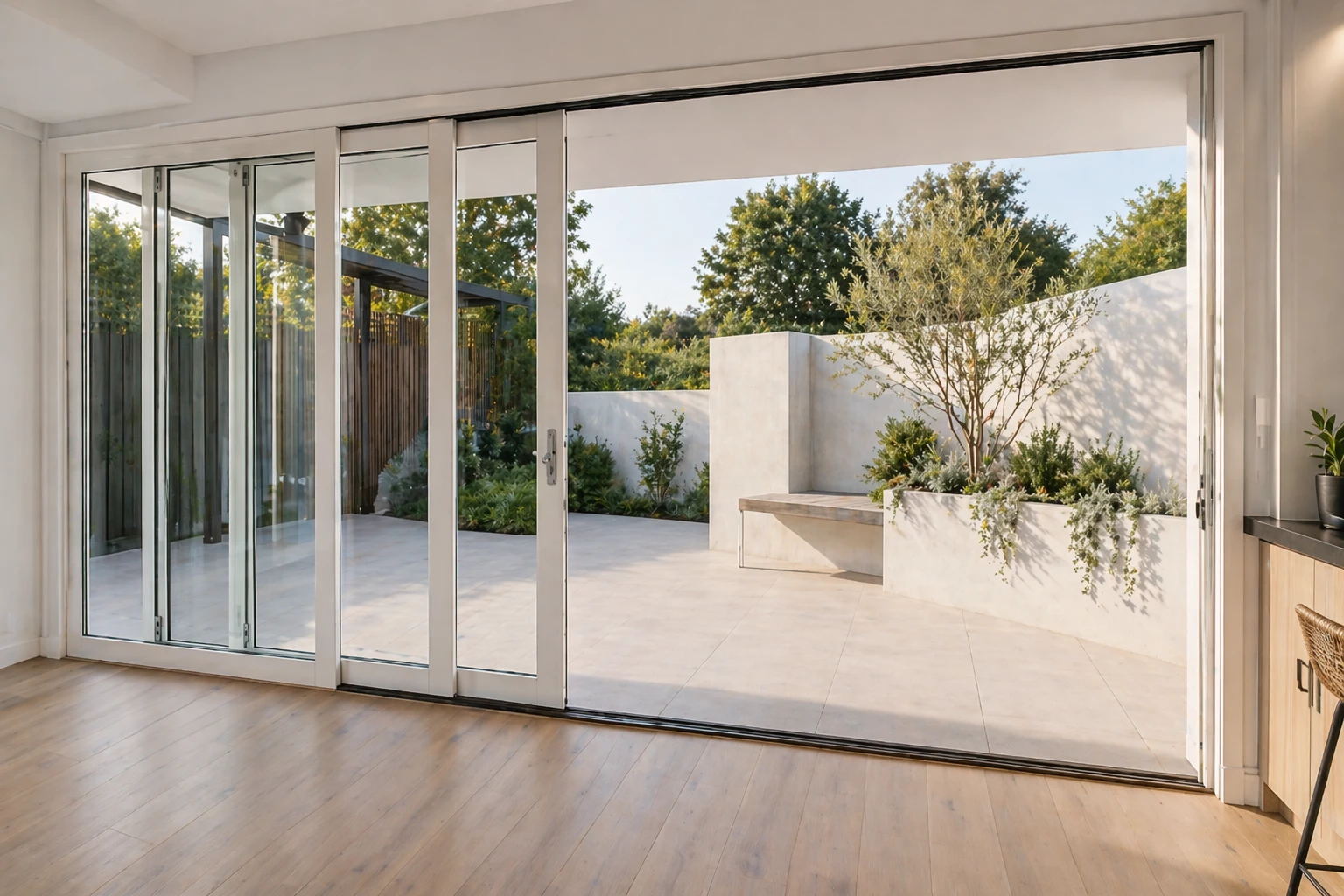
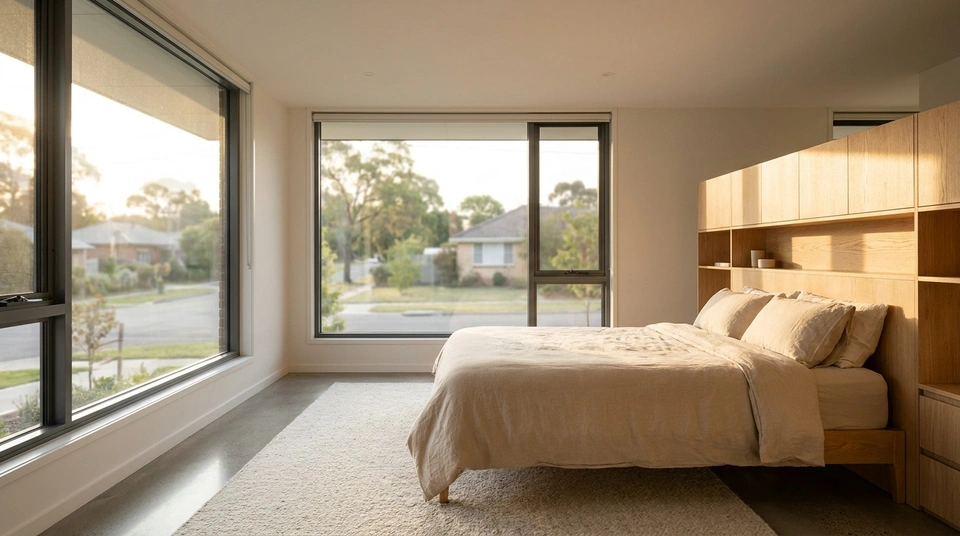
AI-generated illustrative image. Not a product test, certification record or project evidence.
Yes, double glazing reduces noise, but the extent of soundproofing depends heavily on the glass configuration. Standard symmetrical double glazing (e.g. 5/12/5) reduces sound transmission by roughly 25% to 30% (Rw 31–32 dB), muffling speech and suburban ambient sounds. However, to cut perceived traffic and street noise in half (a 10 dB improvement), windows require an acoustic glass make-up—incorporating asymmetric glass thicknesses (e.g. 6mm + 4mm) or an acoustic laminated PVB interlayer (e.g. 6.5mm acoustic laminate), which pushes certified sound reduction to Rw 36–38+ dB.
For Australian homeowners living along busy arterial roads, bus routes, train corridors, or near airport flight paths, outside noise intrusion is more than a minor annoyance—it disrupts sleep, elevates stress, and compromises daily concentration. Because building walls typically achieve high acoustic resistance (a standard insulated brick veneer wall achieves an acoustic rating of Rw 45 to 50 dB), windows represent the weakest acoustic link in almost every home. Standard single-glazed aluminium windows achieve an acoustic rating of only Rw 25 to 28 dB, allowing exterior noise to penetrate virtually unchecked.
While double glazing is widely marketed as an acoustic cure, the real-world noise reduction depends entirely on how the insulated glass unit (IGU) is specified. Standard double glazing engineered purely for thermal insulation provides a noticeable benefit against high-frequency chatter, but often struggles against the low-frequency rumble of heavy trucks and buses. Understanding the physics of glass mass, resonance frequencies, and acoustic lamination allows you to choose a window specification that delivers genuine acoustic calm.
The physics of window acoustics: mass, cavity, and decibels
Sound travels through the air as invisible acoustic pressure waves. When airborne sound strikes a window, the pressure waves cause the glass pane to vibrate. That vibration passes through the glass and re-radiates sound waves into your interior room.
In Australia, acoustic performance for fenestration is measured using the Weighted Sound Reduction Index (Rw) under Australian Standard AS/NZS ISO 717.1. A higher Rw number indicates superior noise-blocking ability. Because the human perception of sound volume follows a logarithmic scale, decibel changes behave counter-intuitively:
• A 3 dB improvement represents a 50% reduction in physical sound wave energy, but is only just noticeable to the human ear.
• A 10 dB improvement represents an approximate 50% reduction in perceived subjective loudness—meaning external traffic noise sounds half as loud.
Upgrading from an older single-glazed aluminium window (Rw 25–27 dB) to a certified acoustic double-glazed window (Rw 36–38 dB) achieves this transformative 10 dB jump, turning intrusive foreground traffic roar into a distant background hum.
The symmetrical glass flaw: understanding the "coincidence dip"
One of the most frequent surprises for buyers of standard double glazing is discovering that car tyre hiss, traffic horns, or children playing outside still penetrate clearly. This occurs due to an acoustic phenomenon known as the 'coincidence dip'.
Standard thermal double glazing is manufactured symmetrically—using two panes of identical glass thickness separated by a gas gap (e.g. 4mm + 12mm cavity + 4mm, or 5mm + 9mm + 5mm). Because both glass panes possess identical physical mass and structural stiffness, they share the exact same natural resonant frequency.
At a critical frequency band—typically between 2500 and 3000 Hz—both panes vibrate in sympathy with each other. At this specific frequency, sound waves pass through both panes with almost zero resistance, causing a sharp drop (the coincidence dip) in acoustic insulation. Because human speech, dog barks, and tyre road hiss fall directly within this 2000–3500 Hz range, symmetrical double glazing can underperform acoustically despite its excellent thermal rating.
The engineering solution: asymmetrical glass and acoustic laminates
Acoustic fenestration engineers eliminate the coincidence dip through two proven glass configurations:
1. Asymmetrical Glass Thickness (e.g. 6mm outer + 12mm cavity + 4mm inner): By combining two glass panes of differing mass, each pane has a different natural resonance frequency. The coincidence dip of the 6mm pane occurs at a different frequency from the 4mm pane, meaning each pane acts as a dampener for the other. This simple specification change raises certified sound reduction to Rw 33–35 dB without increasing frame depth.
2. Acoustic Laminated Glass (e.g. 6.38mm or 6.5mm acoustic laminate): Rather than solid monolithic glass, acoustic laminated glass bonds two glass sheets together using a specialised 0.76mm acoustic polyvinyl butyral (PVB) interlayer. This viscoelastic polymer core acts like a shock absorber: when sound strikes the outer pane, the interlayer absorbs the vibration and converts acoustic kinetic energy into microscopic amounts of thermal friction. Pairing an acoustic laminate with a toughened glass pane in a double-glazed IGU pushes acoustic ratings to Rw 36 to 39 dB.
The flanking seal rule: why airtight frame seals matter as much as glass
Acoustics is governed by the 'flanking path' principle: airborne sound behaves like water, finding and escaping through the smallest gaps. Acoustic testing confirms that even minor unsealed air gaps or worn perimeter seals allow sound to bypass the glass via flanking transmission, noticeably degrading the sound-insulating benefits of high-performance acoustic glass.
Window operating style plays a major role in acoustic success:
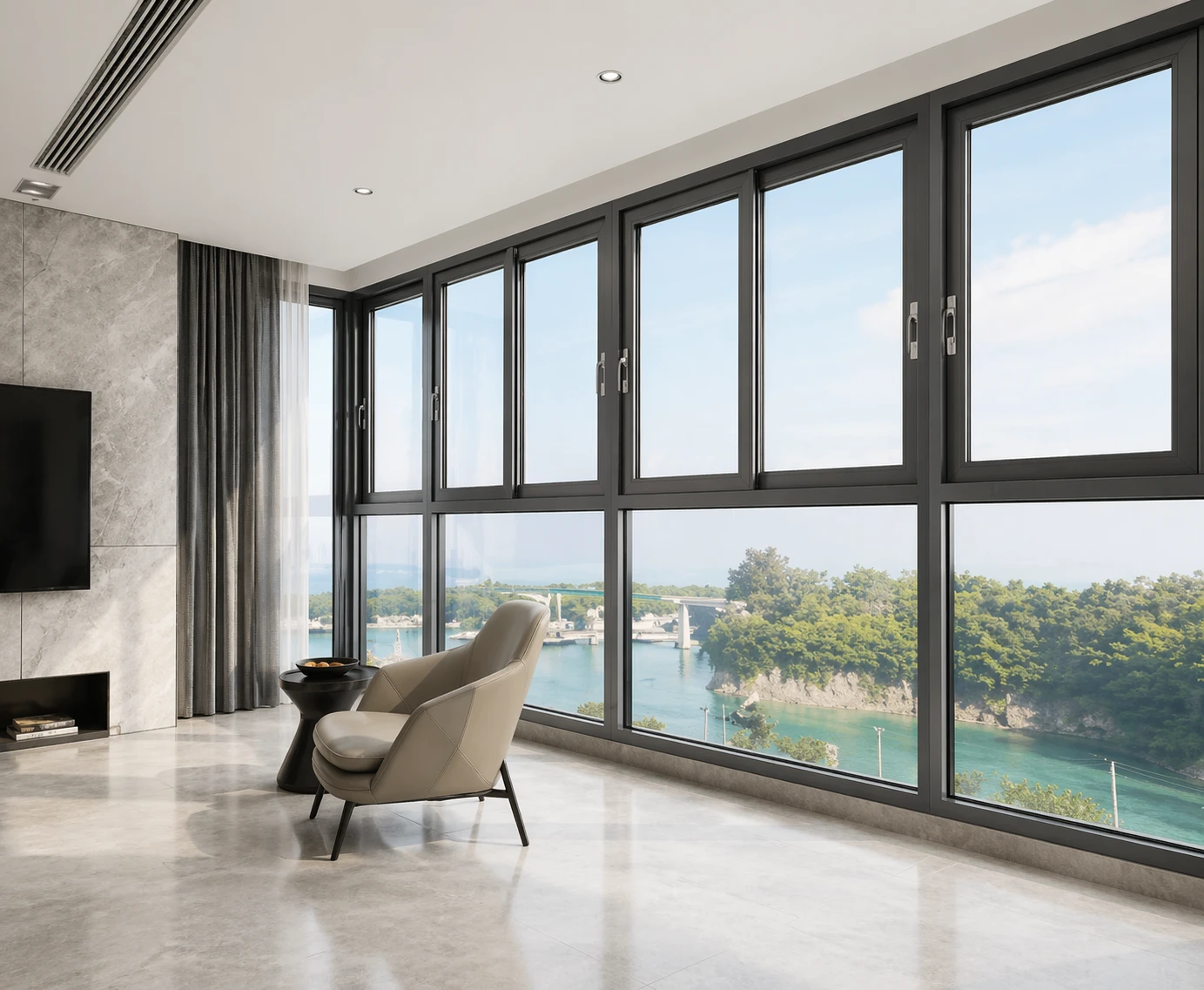
• Horizontal Sliding Windows rely on woven pile brush weatherstrips along the tracks to permit sliding. Brush seals allow microscopic air and sound infiltration, typically limiting sliding windows to Rw 30–34 dB even with upgraded glass.
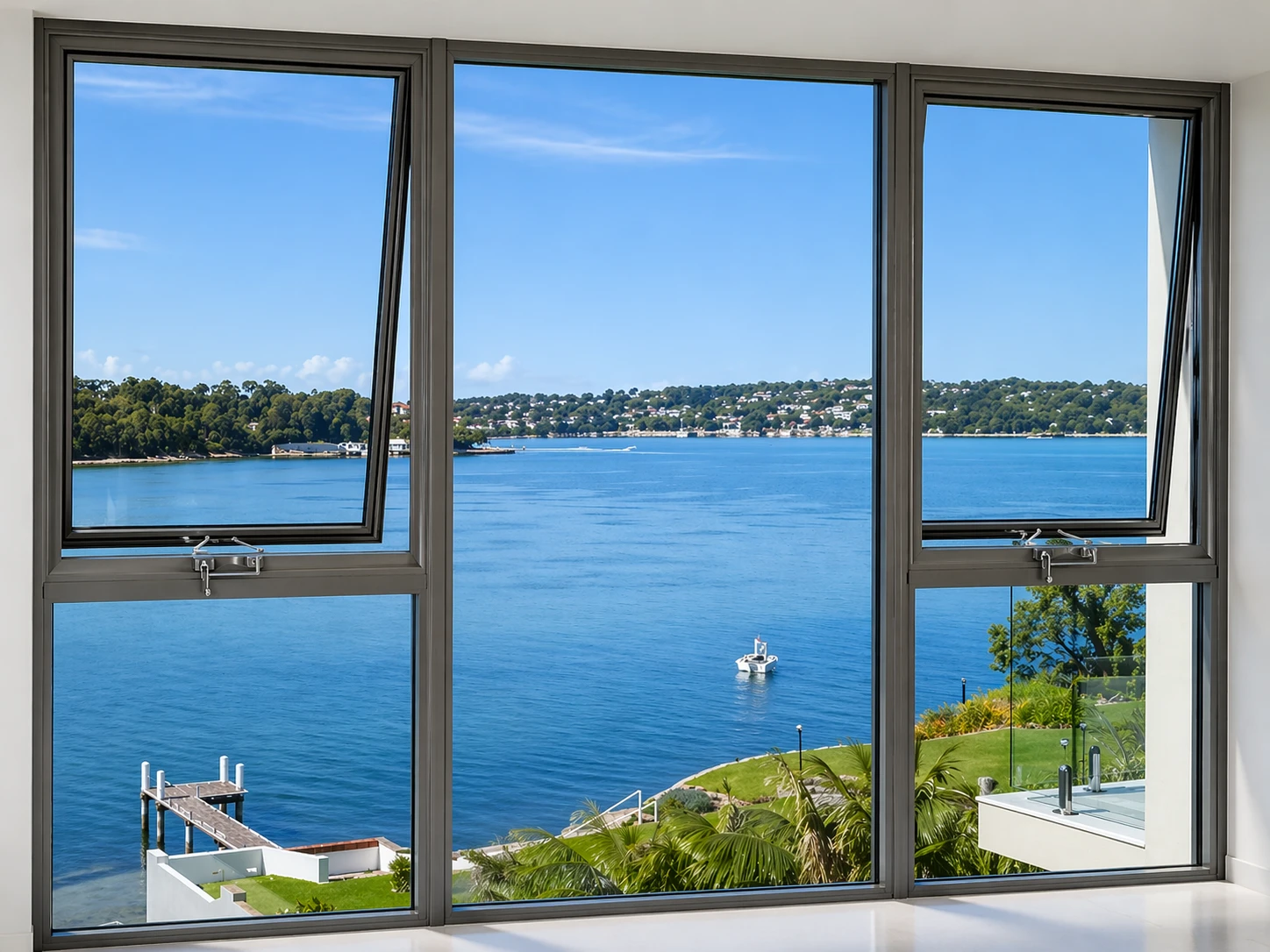
• Awning and Casement Windows pull tight against continuous santoprene compression gaskets when latched, providing a superior airtight acoustic seal (Rw 34–38 dB).
• Fixed Windows provide complete airtight perimeter sealing with zero moving sashes, delivering the purest acoustic barrier.
When secondary glazing wins: heavy diesel and freight train rumble
Standard double glazed IGUs feature gas cavities between 9mm and 16mm wide, which is the thermodynamic sweet spot for thermal insulation. However, very low-frequency sounds—such as diesel bus acceleration, freight trains, and heavy shipping containers (under 250 Hz)—have long wavelengths that easily bridge a 12mm cavity.
For severe low-frequency noise environments, secondary glazing—adding a second independent glass window 50mm to 100mm+ inside the existing window—creates an expansive acoustic air buffer. This large physical separation decouples deep bass frequencies, achieving certified ratings up to Rw 42 to 46 dB. However, secondary glazing requires substantial reveal depth and requires opening two separate sashes to clean or ventilate.
The fixed window acoustic advantage
Because fixed aluminium windows (picture windows) are non-operable, they represent the ultimate acoustic defense in modern Australian architecture.
With no sliding tracks, brush piles, or operable sash gaps, air leakage is zero. The heavy glass unit is bedded directly into structural rubber glazing channels that isolate sound vibration from the building frame. In road-facing master bedrooms or street-front living rooms, specifying double glazed aluminium fixed windows with acoustic laminated glass delivers maximum peace and quiet.
By strategically installing large fixed double glazed panels for daylight and quiet, while placing smaller compression-sealed awning windows on sheltered side walls for ventilation, designers achieve expansive views and acoustic tranquility without compromise.
Frequently asked questions
Can double glazing completely soundproof my house?
No window can eliminate 100% of sound; terms like 'soundproof windows' are marketing descriptions. High-performance acoustic double glazing reduces perceived sound levels by 50% to 70%, dropping loud traffic down to an unobtrusive background level. Complete sound elimination requires specialized studio construction including isolated acoustic walls and concrete ceilings.
Is acoustic laminated glass worth the extra cost over standard double glazing?
If your home faces an arterial road, tram corridor, or school zone, yes. Upgrading to an acoustic laminated double glazed IGU typically adds $200 to $500 per opening, but provides a 4 to 6 dB improvement over standard double glazing, which is immediately noticeable to human ears.
Why do I still hear rumbling trucks through my new double glazed windows?
Low-frequency rumble travels through building foundations, timber floors, and roof eaves as structural vibration, rather than just through window glass. In addition, standard 12mm IGU cavities are too narrow to fully decouple deep sub-woofer bass frequencies. Heavy low-frequency noise requires high-mass laminated glass or secondary glazing.