
Standards & Compliance
Are Slimline Windows Strong Enough? Wind Ratings, AS 2047 and Large Panel Spans
By Sheng Xu · 2 October 2026
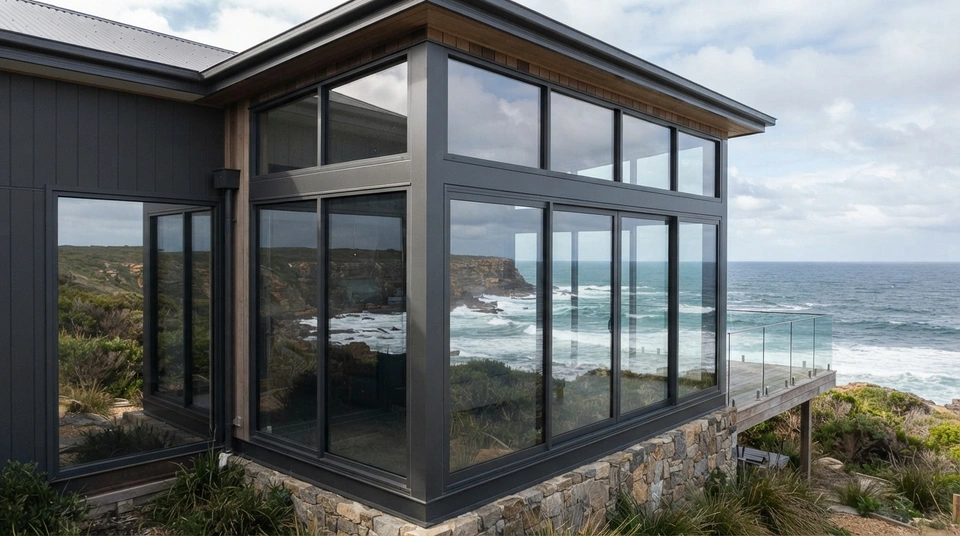
AI-generated illustrative image. Not a product test, certification record or project evidence.
Slimline aluminium windows can be strong enough, because AS 2047 tests a complete window against the wind pressure set by your site's N or C rating, not the width of its frame. Strength depends on the specific tested system, its size and the glass fitted under AS 1288. Ask for the performance label rating, the tested size range and the glass specification before accepting a quote.
Slimline aluminium windows can be strong enough for Australian wind conditions, because AS 2047 tests a complete window against a pressure, not the visible width of its frame. The real question is whether the specific slim system, at your size and your site's wind rating, has test evidence behind it. No Australian standard defines "slimline", so strength is a property of a tested product rather than a label on a brochure.
This guide explains how N and C wind ratings translate into pressures, where slim frames are checked hardest, how glass span fits in, and what to ask before you accept a quote. Large glass panels are most common in fixed windows, which our pillar page on fixed aluminium windows covers.
Does a slimmer frame mean a weaker window?
Not automatically. AS 2047 is the mandatory minimum specification for windows and external glazed doors in Australia, and the Australian Glass and Window Association (AGWA) explains that products are tested for serviceability and ultimate wind loads as well as water penetration resistance. A product earns its rating by passing those tests at a given pressure, so the visible face width of the frame is not what is being measured.
The National Construction Code explains why. Its housing provisions note that window systems rely on the design and testing of structural members, such as mullions, transoms, and meeting rails and stiles, to withstand wind loads. Strength comes from the whole tested system: the sections, reinforcement, glass and hardware working together. On its own, a narrow sightline says little either way.
The tests behind an AS 2047 rating, and who is responsible for nominating the wind rating, are covered in our explainer on AS 2047. Here the focus is on what changes when the frame gets slimmer and the glass gets bigger.
What wind pressure does your rating actually mean?
Wind ratings use a letter and a number. N ratings apply in non-cyclonic regions and C ratings apply in cyclonic regions. Each rating converts into two test pressures measured in pascals. According to AGWA, the structural test measures how far the window deflects at the serviceability pressure, and the ultimate strength test confirms the window withstands the higher ultimate pressure. Water penetration resistance is tested separately.
AGWA's selection guide lists the pressures, taken from AS 4055 and rounded to the nearest 100 Pa. For a general window, N2 is tested at a serviceability pressure of 400 Pa and an ultimate pressure of 900 Pa. N3 is tested at 600 Pa and 1,400 Pa, N4 at 800 Pa and 2,000 Pa, and C2 at 800 Pa and 2,700 Pa. Corner windows carry higher values: for N3 they rise to 800 Pa and 2,000 Pa.
Treat any published table as a guide. AS 4055 was revised in 2021, so confirm the figures against the rating nominated for your project. The performance label on each window shows the rating it passed, and that rating needs to be at least the rating nominated for your site.
Where are slim frames checked hardest?
Wind pushes on the glass, and the glass passes that load to the members that hold its edges: the head, sill and jambs, plus any mullion or transom between panes. Glazing manufacturer Solarlux describes the load travelling through the whole system, including the glass, frame, mullions, transoms, tracks and fixings, and says it matters not only whether glass will break but how much the system moves.
AGWA's guide says the AS 2047 structural test measures window deflection at the serviceability pressure against a limit of span divided by 250. AS 1288, the standard for selecting and installing glass, separately limits the glass itself to span divided by 60 under serviceability loading, and requires the effect of frame deflection on the glass edge to be allowed for. Those AS 1288 clauses are quoted from the 2006 edition, which AS 1288:2021 has superseded. AGWA notes the 2021 revision covered only Sections 1, 6 and 7, but confirm the wording in the edition your certifier uses.
Glass supplier Viridian adds a practical note. Even when correctly designed, glass under high wind pressure can show temporary bowing reflections or audible creaking as the framing flexes, which it describes as normal service behaviour rather than a defect. It also says it is common to limit visible deflection to 20 mm or less to manage how occupants perceive the movement.
How do glass size and span interact with the frame?
Larger panes span further, so they move more under the same pressure, and thickness is only part of the answer. Solarlux lists pane dimensions, support conditions, wind pressure, glass type, load duration and the framing system among the factors. AS 1288 provides a deemed-to-comply method for the minimum glass thickness needed to resist the serviceability and ultimate pressures for a given pane size, and its Supplement 1 offers tables of minimum glass thickness for given wind loads.
Viridian notes that the supplement covers ultimate pressures up to 10 kPa and serviceability pressures up to 6.2 kPa. Above those limits, further verification is needed.
This is why advertised maximum sizes need care. One Australian supplier lists fixed panels up to 3000 mm but adds that this is subject to glazing limits, which means the real maximum depends on the glass specification, the wind rating and the tested configuration. Operable sashes add hardware and tracks to the load path, so ask about each configuration separately. Locks and anti-lift hardware are covered in our guide to aluminium sliding window security.
What can go wrong with the rating itself?
The most common problems are about paperwork rather than aluminium. AS 4055, the simplified method for housing, applies to Class 1 and Class 10 buildings within geometric limits. Viridian lists limits that include a maximum building height of 8.5 m, a maximum width of 16 m, eaves no wider than 900 mm and a roof pitch no steeper than 35 degrees. Where a building does not fit those parameters, wind loads need to be determined using the more complex methods in AS 1170.2.
A homeowner in a 2024 renovation forum thread described the consequence: a Western Australian house rated N3 under AS 4055 sat outside the standard's geometric limits, so, according to the poster, a different method should have been used, and a site-specific check gave a wind speed above the N3 ultimate value. A forum post is not evidence about the standard itself, but it shows why a rating on a drawing is only as good as the method behind it.
AGWA states that site ratings should be calculated and supplied by the site engineer, architect, designer or builder, and that a window with no AS 2047 or AS 1288 labelling should be sent back. The Australian Building Codes Board says NCC 2022 references the 2021 editions of AS 4055, AS/NZS 1170.2 and AS 1288. A later NCC edition may reference newer ones, so confirm the edition your certifier is working to.
What should you ask before accepting a slim-frame quote?
Ask for evidence at the level of your actual windows, not the product family. Five questions cover most of the risk.
First, which wind rating and water penetration rating appear on the performance label for this exact configuration, and does the rating match the one nominated for the site?
Second, does the test report cover my window size, and what glass was fitted during the test?
Third, do large openings need mullions, reinforcement or thicker glass, and are those items included in the price?
Fourth, what glass type and thickness has been selected under AS 1288 for each pane, and for which wind pressures?
Fifth, what fixing and installation method does the rating assume, and who is responsible for it on site?
Written answers make quotes comparable and show whether a supplier treats strength as a tested property or a sales claim. Our buyer's checklist for slimline windows applies the same approach to the rest of the quote.
Frequently Asked Questions
Are slimline windows less wind resistant than standard windows?
There is no automatic rule. AS 2047 tests the whole window against the pressures for a rating, so a slim system that passes at the rating nominated for your site meets the standard in the same way as a wider profile. The practical risk is assuming a slim system is rated for every size and every wind region. Check the label and the test report for your configuration.
What wind rating do I need for a slimline window?
You need the rating nominated for your site, not a rating chosen by the window supplier. AGWA says the site engineer, architect, designer or builder should calculate and supply it, using AS 4055 for housing within its limits or AS/NZS 1170.2 otherwise. The windows must then carry a label showing they passed at that rating or higher.
How large can a slimline fixed window be?
There is no universal maximum. The limit depends on the tested size range for the system, the wind pressures at your site and the glass thickness required by AS 1288. Supplier maximums are product specific, and some are expressed as subject to glazing limits, so ask for the tested size and the glass specification in writing.
Is it normal for large glass to creak or bow in strong wind?
Some movement is normal. Viridian says glass under high wind pressure can show temporary bowing reflections or audible creaking as framing flexes, and that these are not defects when the system is correctly designed. Persistent distortion, water leaks or glass that stays displaced after the wind drops should go back to the supplier for assessment.
Does a higher wind rating make a slimline frame wider?
Not necessarily, but higher pressures put more load on every member, so a system may need deeper or reinforced sections or thicker glass to reach a higher rating. Whether that changes the visible sightline depends on the system. Ask for the sightline measurements at the rating your site needs rather than at the lowest rating.
Our Products
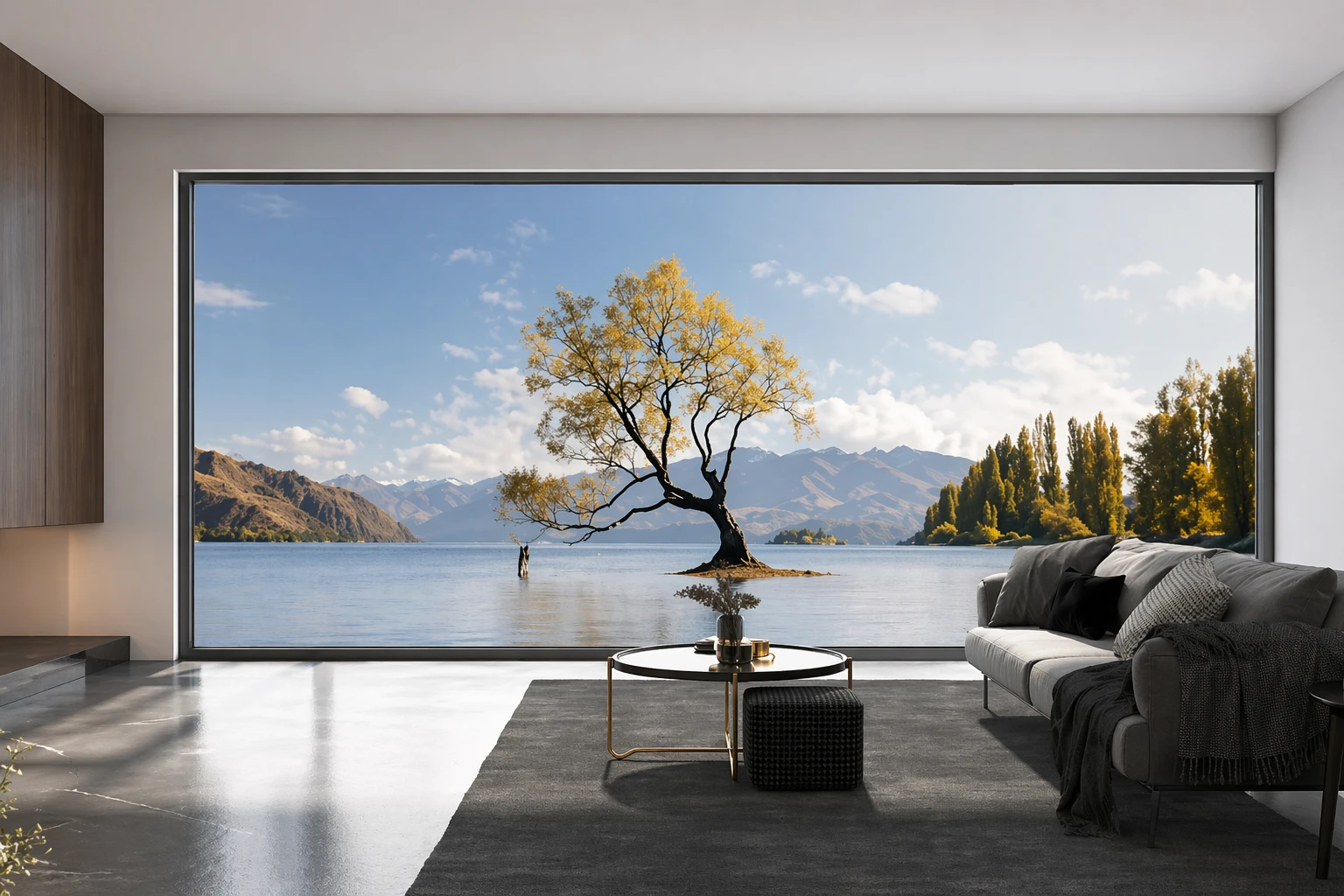
Fixed Windows
View system
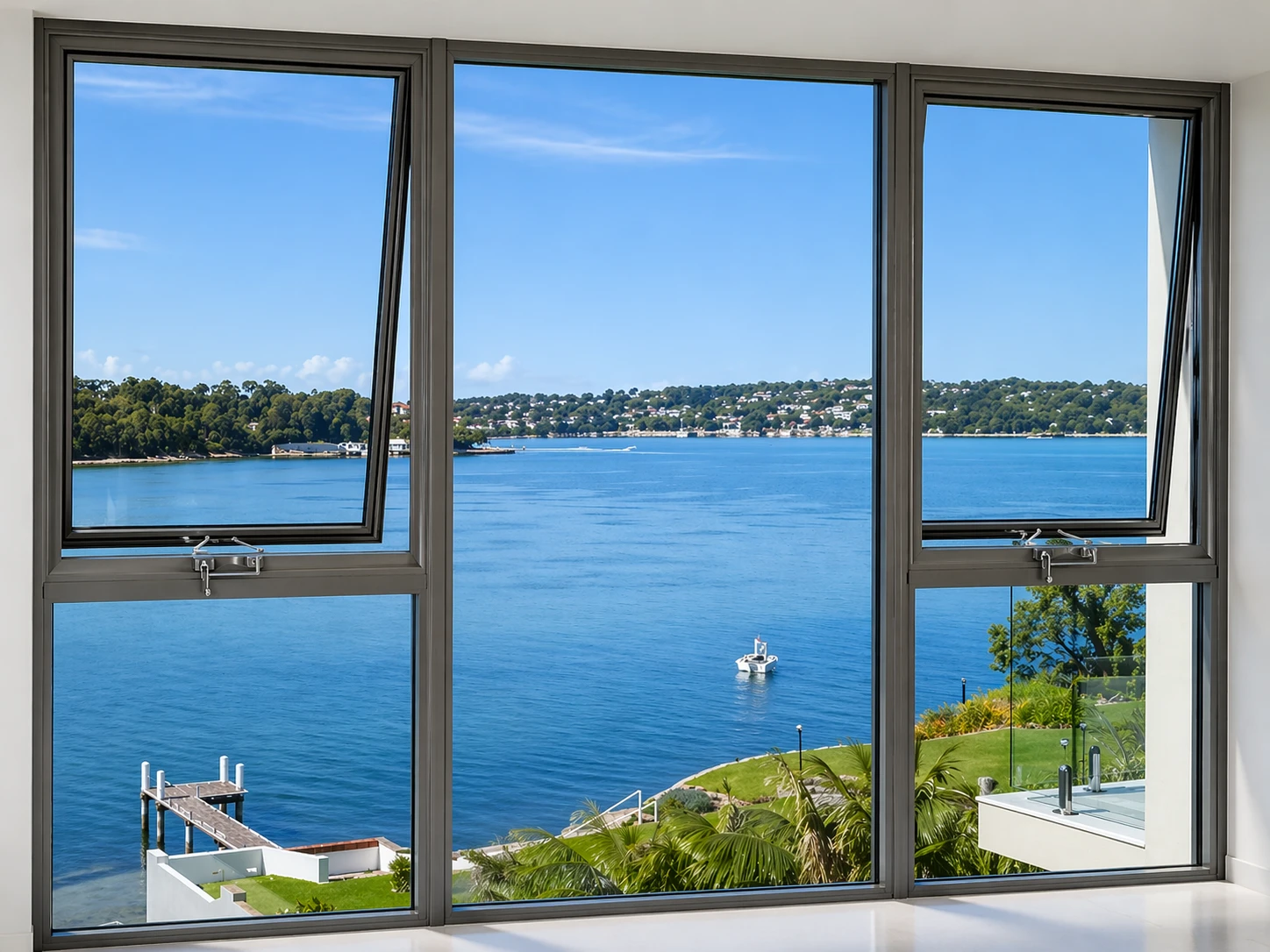
Awning Windows
View system
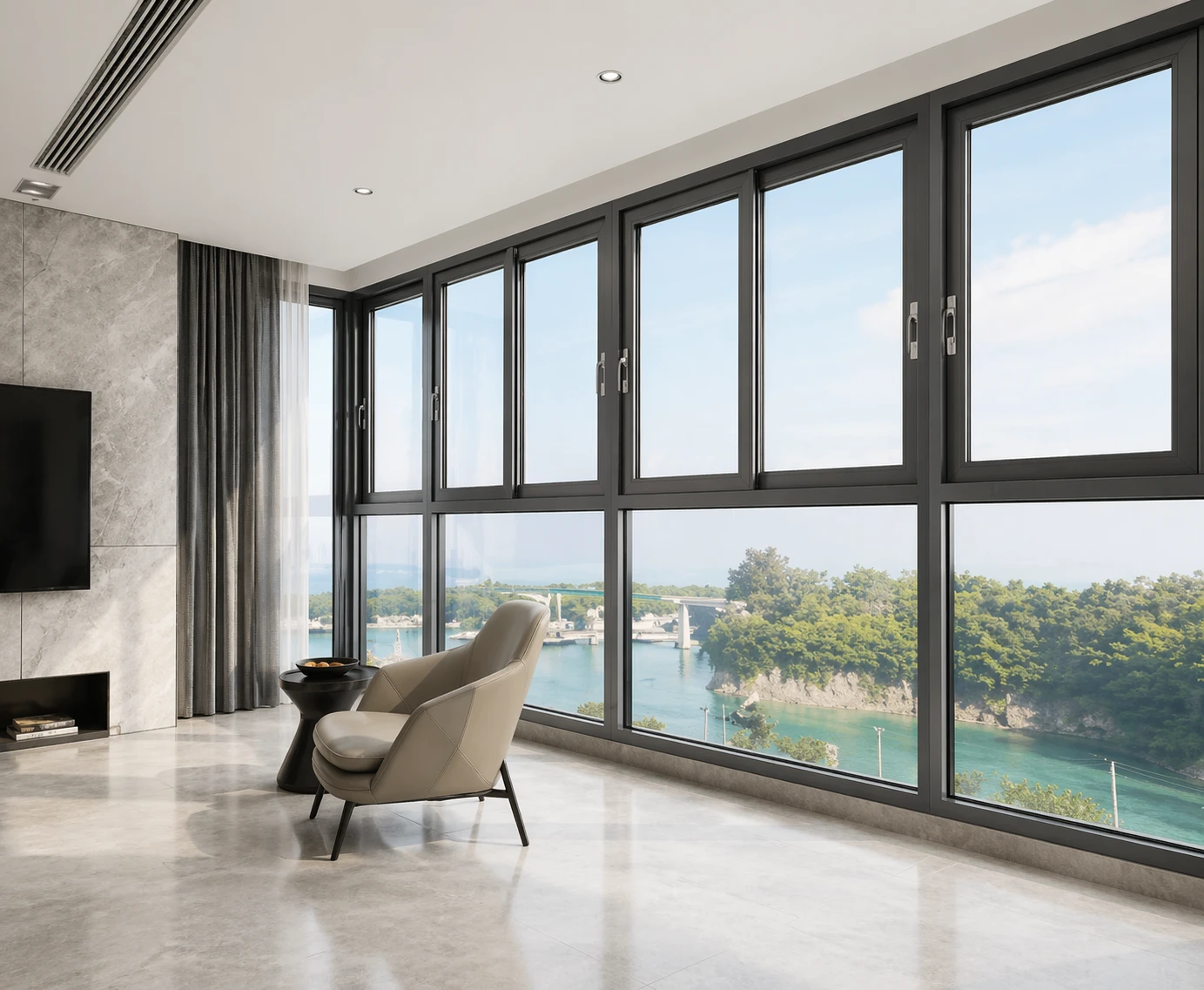
Sliding Windows
View system
Sliding Doors
View system
Stacker Doors
View system