
Window Sizing & Specifications
Window Sightline Explained: Frame, Interlock and Mullion Widths (and Why Spec Sheets Mislead)
By Sheng Xu · 2 October 2026
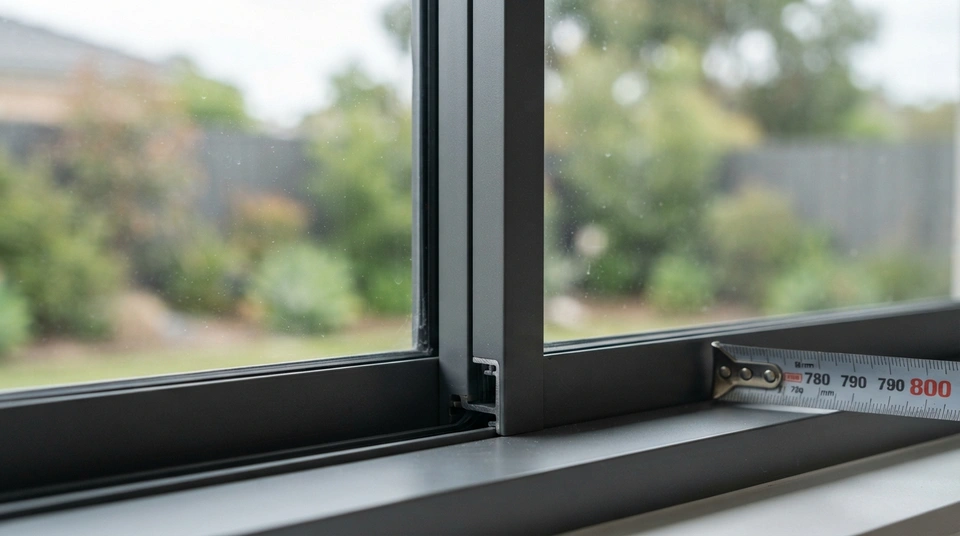
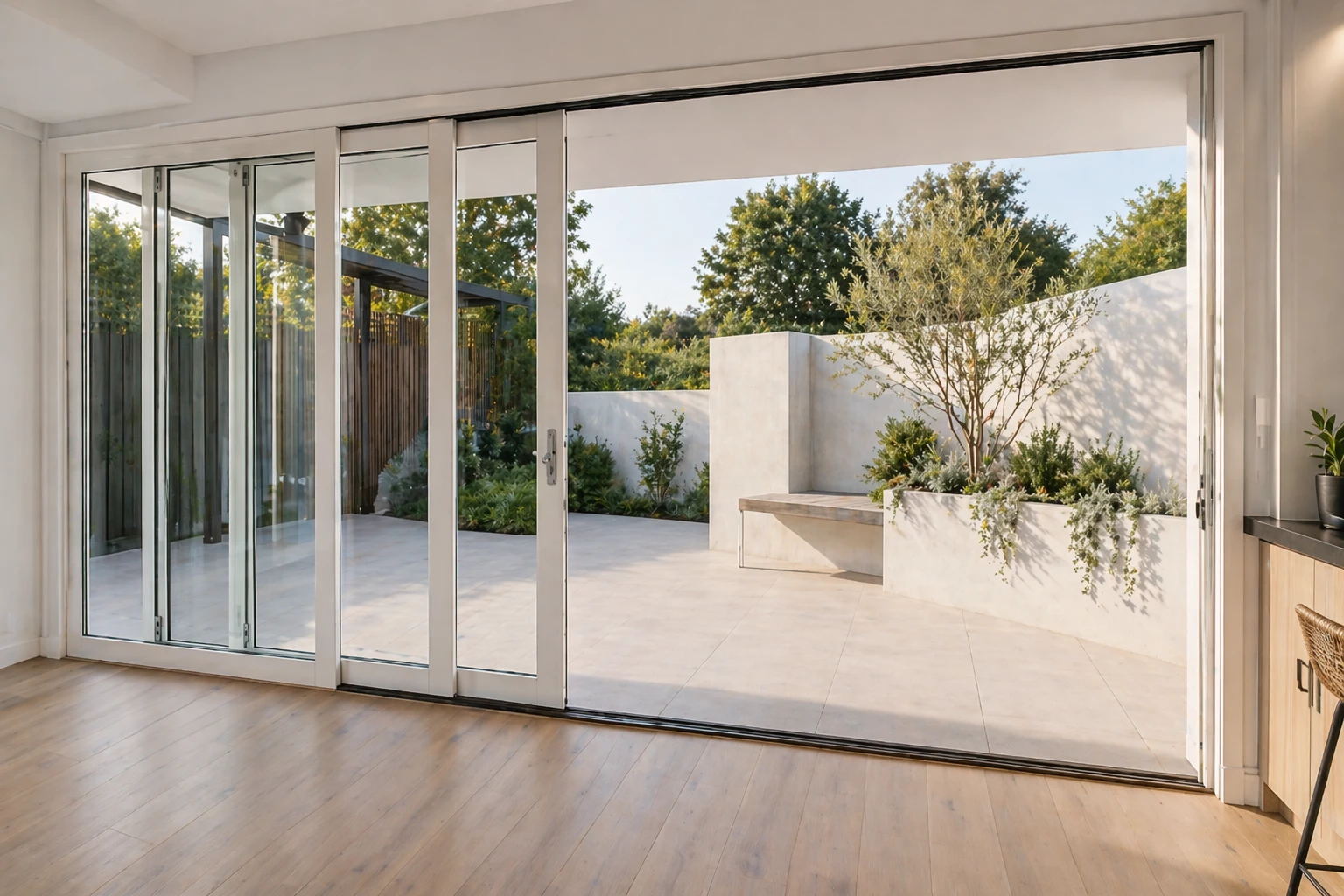
AI-generated illustrative image. Not a product test, certification record or project evidence.
A window sightline is the width of aluminium visible when you look straight at a closed window, measured in millimetres. It is not one number: the outer frame, sash, interlock or meeting stile, and mullion each have their own sightline. No Australian standard defines slimline, so supplier figures vary. Ask which point a quoted figure refers to, and request section drawings, before comparing quotes.
A window sightline is the width of aluminium you can see when you look straight at a closed window, measured in millimetres. It is not one number. Each part of a window has its own sightline, and a quote that promises a "20 mm sightline" only means something once you know where on the window that figure was taken.
We could not find an Australian standard that defines "slimline" or sets a sightline threshold, and one UK manufacturer notes that there is no British Standard for it either. In practice the thresholds come from suppliers, and they do not agree with each other. This guide explains what sightline measures, where each figure is taken, why spec sheets mislead, and what to ask before comparing quotes.
What does a window sightline actually measure?
Bildau & Bussmann, a German fabricator, describes a sightline as the visible portion of the window frame when the sash is closed, measured from the edge of the glass to the outermost edge of the frame. Corsham Building Products, a UK installer, puts it more broadly: the part of the frame that stays in view from inside or outside once the window is installed.
Sightline is a face-on measurement. It is different from frame depth, which is how far the profile reaches into the wall. The manufacturer Janwii makes this point directly: a deep profile can still show a narrow visible face. A video from the window manufacturer Hope's Windows goes a step further and argues that depth matters too, because a shallower frame lets you see more when you look at the window from an angle.
There is also a terminology trap. In many UK homeowner guides, "equal sightlines" means that frames, glazing bars and heights line up across the windows of a house, not that the frame is narrow. This guide uses sightline to mean visible frame width.
Frame, sash, interlock, meeting stile and mullion: where each is measured
The same window can have four or five different sightlines, and they are rarely equal.
The outer frame sightline is the visible aluminium around the perimeter, where the window meets the opening. Direct Trade Windows, a UK fabricator, notes that on sliding doors this frame figure is often thicker than the interlock figure.
The sash sightline belongs to the moving panel. Corsham Building Products points out that an opening window has its own sash profiles, so an opening unit often shows a different sightline from a fixed pane beside it. On a window, Vitrum Solutions, another UK installer, describes the visible width as the frame and sash combined.
The interlock, also called the meeting stile, is where two sliding sashes overlap. Vitrum Solutions calls this point the central junction and uses interlock and meeting stile for the same thing. IQ Glass says most claims about the thinnest sliding systems refer to this centre interlock.
Mullions are the vertical dividers between adjacent panes, and transoms are the horizontal ones. MEICHEN, a supplier serving the Australian market, gives a typical visible divider width of 50 mm to 120 mm depending on structural demand, which is supplier guidance rather than a rule. On a fixed window made up of several panes, these dividers sit in the middle of your view, so their width is worth checking separately from the perimeter frame.
Why spec sheets and quotes can mislead
Two suppliers can both advertise a slim window with very different frame widths, because they quote different measurement points. The warning appears in several supplier guides. MEICHEN advises buyers to confirm whether a quoted 20 mm refers to the interlock, the vertical stile or the outer frame, because these are different measurements and marketing can blur them. IQ Glass says that when you compare thinnest claims, the published figures can refer to different details. Windows Store Ltd, a London window supplier, goes further and says suppliers sometimes quote the frame sightline instead of the interlock, which it describes as a different and more flattering number. That is one supplier's observation, not a measured finding.
The labels are also inconsistent. Direct Trade Windows puts standard sliding door systems at a 50 to 90 mm interlock, slim systems at 30 to 35 mm and ultra-slim systems at 20 to 27 mm. MEICHEN describes a conventional residential sliding door as showing 90 to 120 mm where two panels meet, and a slim frame system as 20 to 40 mm. Vitrum Solutions calls anything above 50 mm on a slider standard rather than slim. The bands overlap and disagree, which is what you would expect when no standard defines the term.
Most of these published bands describe sliding doors, and several come from UK suppliers. Do not assume they transfer to windows or to Australian products. For a window, ask for the frame, sash and mullion widths separately.
A face width on its own is also incomplete. Direct Trade Windows notes that an ultra-slim system limited to narrow panels can show more interlocks across a wide opening than a slightly wider system that accepts larger panels. IQ Glass adds that the centre sightline is only one detail, and that tested performance, glazing thickness and maximum panel sizes and weights matter as well.
Does a narrower sightline mean a weaker window?
Not automatically, but a narrower sightline moves the structural work somewhere else, so check the tested configuration rather than the face width. In Australia, AS 2047 covers the window or glazed door as a complete system, with AS 1288 covering the glass, according to A&L Windows. Azuma Design, a NATA-accredited testing laboratory, lists the AS 2047 tests as deflection, operating force, air infiltration, water penetration and ultimate strength. A sightline figure alone does not show that a particular window passed. Our guide to AS 2047 explains the standard in more detail.
Meeting stile strength is one place where this shows up. Architectural Window Systems (AWS), an Australian aluminium window and door systems supplier, lists optional meeting stile strengths on its sliding window to suit different design wind load areas. An Australian sliding window specification manual from Hanlon Windows publishes separate wind rating tables for light and heavy meeting stiles. In other words, the same sliding window can be offered with more than one interlock build, and the choice affects the rated wind pressure.
Some slim systems make up for a narrow face with a deeper profile or internal reinforcement. MEICHEN describes deeper extrusions and steel or aluminium stiffening inserts as ways to keep structural performance without widening the visible profile. That is a supplier explanation. Our guide to wind ratings and large panel spans covers the structural side, and the existing guides to thermal breaks and standard sliding window sizes cover those topics without repeating them here.
How to compare quotes: what to ask for
Ask for drawings, not adjectives. IQ Glass recommends requesting dimensioned section drawings for the meeting stile, head, jamb and threshold, and confirming which measurement is being quoted and for which configuration. For a window, add the sash and any mullion or transom.
Then ask three things. Which point does each millimetre figure refer to? Is it for the single or double glazed version, fixed or opening, and what glass thickness does it assume? And is there an AS 2047 test report or rating for that exact configuration? A&L Windows notes that a supplier confident in its compliance will have this documentation ready before the order is placed.
Finally, compare like with like. Put the same measurement point from each quote side by side, and treat any quote that gives only an adjective such as slim or minimal as incomplete. Our buyer's checklist for slimline windows turns this into a longer list of questions.
Frequently Asked Questions
What is a window sightline in simple terms?
It is the width of frame you see when you look straight at a closed window, measured in millimetres at a stated point such as the outer frame, sash, interlock or mullion. A narrower sightline leaves more of the opening as glass.
Is interlock sightline the same as frame sightline?
No. The interlock is where two sliding sashes meet, while the frame sightline is the visible aluminium at the perimeter of the opening. Direct Trade Windows notes that the frame figure is often thicker, so always check which one a quote refers to.
What sightline counts as slimline in Australia?
We could not find an Australian standard that sets one. Supplier guides use different bands, such as 20 to 40 mm where panels meet for slim frame sliding systems in one guide aimed at Australian buyers, so ask for the millimetre figure, the measurement point and a section drawing instead of relying on the word slimline.
Does a slim sightline make a window less secure or less energy efficient?
Not by itself. One UK supplier argues that security depends on hardware and system engineering rather than frame width. Energy performance depends on the glass, the frame and any thermal break working together, so a thin face width does not tell you the window's rating. Check the whole-window rating, and see our guide to slimline windows and energy efficiency for the limits of thermal breaks in narrow frames.
Our Products

Fixed Windows
View system
Awning Windows
View system
Sliding Windows
View system
Sliding Doors
View system
Stacker Doors
View system