
Cost & Practical Guides
Slimline Window Buyer's Checklist: 12 Questions to Ask Before You Accept a Quote
By Sheng Xu · 2 October 2026
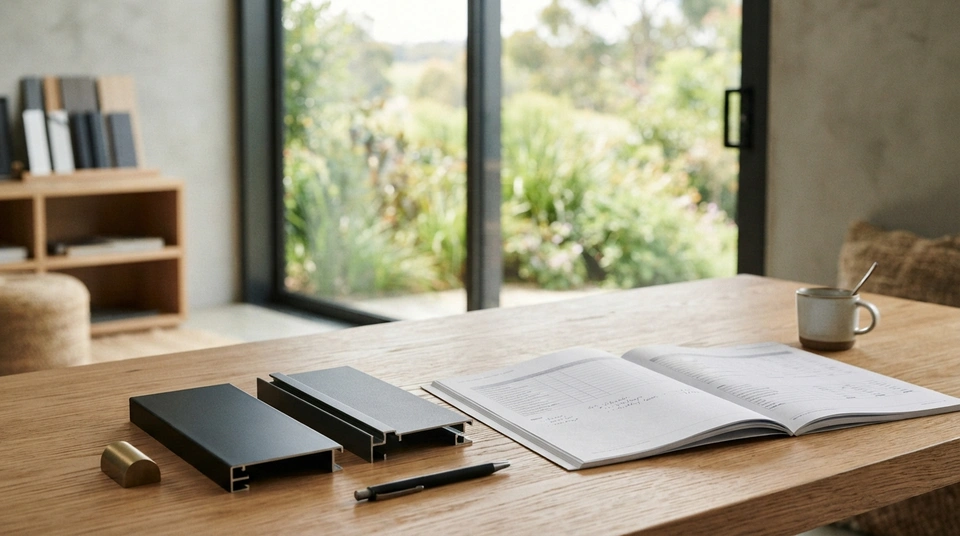
AI-generated illustrative image. Not a product test, certification record or project evidence.
Before you accept a slimline window quote, ask 12 questions in writing: where the frame width was measured, which glass is fitted, thermal break details, WERS data, the AS 2047 test report, wind rating, BAL evidence, finish warranty, hardware, lead time, installation scope and quote basis. Send every supplier the same window schedule so the answers can be compared line by line.
A slimline window quote is only worth comparing once the same facts are written down: where the frame width was measured, which glass is fitted, which tested system is supplied and who installs it. Slimline is a marketing word rather than a defined category. A UK installer, Vitrum Solutions, notes that every manufacturer uses it and that actual sightlines vary by tens of millimetres between systems.
Quotes also drift apart for reasons buyers cannot see. One r/AusRenovation poster describes two supplied-and-installed quotes for the same 13 aluminium windows that differ by more than double. This checklist gives you 12 questions to put to every supplier, and what a good answer looks like.
How to use this checklist with your quotes
Send every supplier the same drawings or window schedule, then ask for the answers in writing. RS Doors & Windows suggests sending, at minimum, the project location, opening sizes, product type, glass, colour, quantity, installation requirement and desired timing.
Insist that evidence matches your exact configuration. RS Doors & Windows advises asking for data that applies to the offered configuration rather than assuming a rating for one product transfers to another size or glass option, and Ropo Windows warns against generic certificates that do not match the frame system, glass or hardware supplied. A vague or missing answer is information in itself.
The 12 questions to ask before you accept a quote
1. Where was the quoted frame width measured?
Sightline can mean the outer frame, the frame and sash combined, or the centre division where two panels meet. UK supplier Glass Tec Windows suggests asking which one is meant, and IQ Glass advises requesting dimensioned section drawings for the meeting stile, head, jamb and threshold because published figures can refer to different details. A good answer names the measurement point for each opening and attaches a drawing. Our window sightline explainer covers the terms in more depth.
2. Which glass is in the quote?
Glass drives much of both cost and performance, so "double glazed" is not enough. Ask for the make-up of each pane, including whether it is low-E, toughened or laminated. RS Doors & Windows lists AS 1288 for glass selection and installation, AS 2208 for safety glazing and AS 4666 for insulating glass units as the glass standards to ask about. A good answer states the build-up pane by pane and confirms which standards it meets.
3. Does the frame have a thermal break, and what does the quote say about whole-window performance?
RS Doors & Windows points out that a thermal break improves the frame's heat path, while the whole-window result also depends on glass, size, seals and installation. A good answer separates frame and glass, and points to rated data for the complete window. For the fundamentals, see our thermal break and slimline energy efficiency articles rather than relying on the label alone.
4. Can you supply WERS data that your energy assessor can use for this exact window?
RS Doors & Windows notes that WERS ratings include the U-value and SHGC figures an energy assessor needs. AGWA's selection guide says the WERS Uw must be equal to or lower than the energy report requirement, and the SHGCw must fall within a set tolerance of it. A good answer gives rated figures for the proposed size and glass combination, supplied before you order, so any rating problem is found on paper rather than on site.
5. Can I see the AS 2047 test report and compliance certificate for this series?
AGWA says compliance certificates are acceptable only when the issuer belongs to an accreditation scheme, and that test reports should be requested if labels or certificates are in doubt. B&W Windows adds that you should confirm the specific series was tested, not just the product range, and that sizes stay within tested limits. A good answer is a report from an accredited laboratory for the exact series and size range. Our AS 2047 explainer sets out what the tests cover.
6. What wind rating and exposure classification will the windows carry?
For housing, AGWA's reproduction of AS 2047 Appendix C says the purchaser should nominate the window rating, the exposure classification and whether a window is a corner window when ordering. A good answer states all three for each opening and matches the wind classification for your site. Wide slim-frame panels are worth querying separately, and our strength and wind rating article explains why.
7. If I am in a bushfire-prone area, what BAL evidence covers the whole window?
Give the supplier the BAL from your site assessment. AGWA says compliance is checked either by meeting the prescriptive provisions of AS 3959 or through test reports for systems tested to the bushfire test standards, so the evidence has to cover the system, including glass and any screens. A good answer names the BAL level in writing for the exact assembly and supplies the report or the prescriptive basis. Frame width alone proves nothing.
8. What warranty covers the powder-coat finish, and who stands behind it?
Interpon states that it warrants only the base coat, so the total coating system needs a warranty from the system supplier. AGWA reports that the revised AS 3715:2025 links coating selection to atmospheric corrosivity zones, and that distance from the coast no longer defines coastal conditions on its own. A good answer gives the coating specification, the warranty term, the warrantor and any exposure conditions, all in writing. Our black slimline windows article covers dark-colour upkeep.
9. Which hardware and locks are included?
Airtasker advises checking whether locks, hinges, winders, flyscreens and other accessories are included in the quoted price. B&W Windows lists rollers, tracks and locking hardware among the components that determine window quality. A good answer lists the hardware type for every opening and flags what costs extra. Our aluminium window security article explains lock options.
10. What is the realistic lead time, and what does it exclude?
Green Life Windows says the process from quote and measure through to installation can take anywhere from 6 to 12 weeks, depending on complexity and season. ViewLux, a US supplier, warns that short factory turnaround claims can leave out engineering approvals, material procurement and curing. Ask what starts the clock. A good answer gives a date range tied to milestones such as drawing approval, and says what happens if it slips.
11. What does the installation scope include?
RS Doors & Windows says to establish before accepting a quote who measures the opening, who confirms site readiness, and who is responsible for fixing, waterproofing interfaces, drainage, sealant, protection, adjustment and handover. For a replacement job, hipages adds the removal of existing windows. A good answer draws a written boundary between supply and installation. Our guide to measuring aluminium sliding windows shows what a proper measure involves.
12. Is the price supply-only or supplied and installed, and what is excluded?
hipages recommends asking whether prices are supply only or supply and install, and whether the quote includes removal of your existing windows. RS Doors & Windows prefers to compare proposals line by line: system, glass, hardware, finish, delivery and installation. A good answer is itemised per opening, states whether GST applies and lists exclusions such as access equipment. Our slimline cost article looks at what drives the price.
Frequently Asked Questions
Is the narrowest sightline always the best choice?
Not necessarily. IQ Glass notes that "thinnest" figures usually refer to the centre interlock, which is only one part of the overall look, because head, jamb and threshold widths vary by system. Weigh the narrowest figure against glass size, wind rating, thermal performance and budget.
Can I compare a slimline quote with a standard-frame quote?
Yes, once both quotes cover the same schedule: the same sizes, glass, finish, hardware and installation scope. Until then, a price gap may reflect scope rather than frame width. Compare scope first and price second.
Is it safe to buy slimline windows from an overseas supplier?
It can be done, but Australian requirements still apply. UltraSlim Windows, an exporter, lists AS 2047 test reports from an accredited laboratory and the AS/NZS 2208 safety glass marking among the main checks for Australian projects. Also ask who provides local warranty support.
What if a supplier cannot answer one of the questions?
Ask again in writing and set a reply date. Paarhammer warns that architects and builders face a real risk from falsified or non-existent test reports, or from a different Standard being quoted. Missing documents are a reason to pause the order, whichever supplier you choose.
Putting the checklist to work
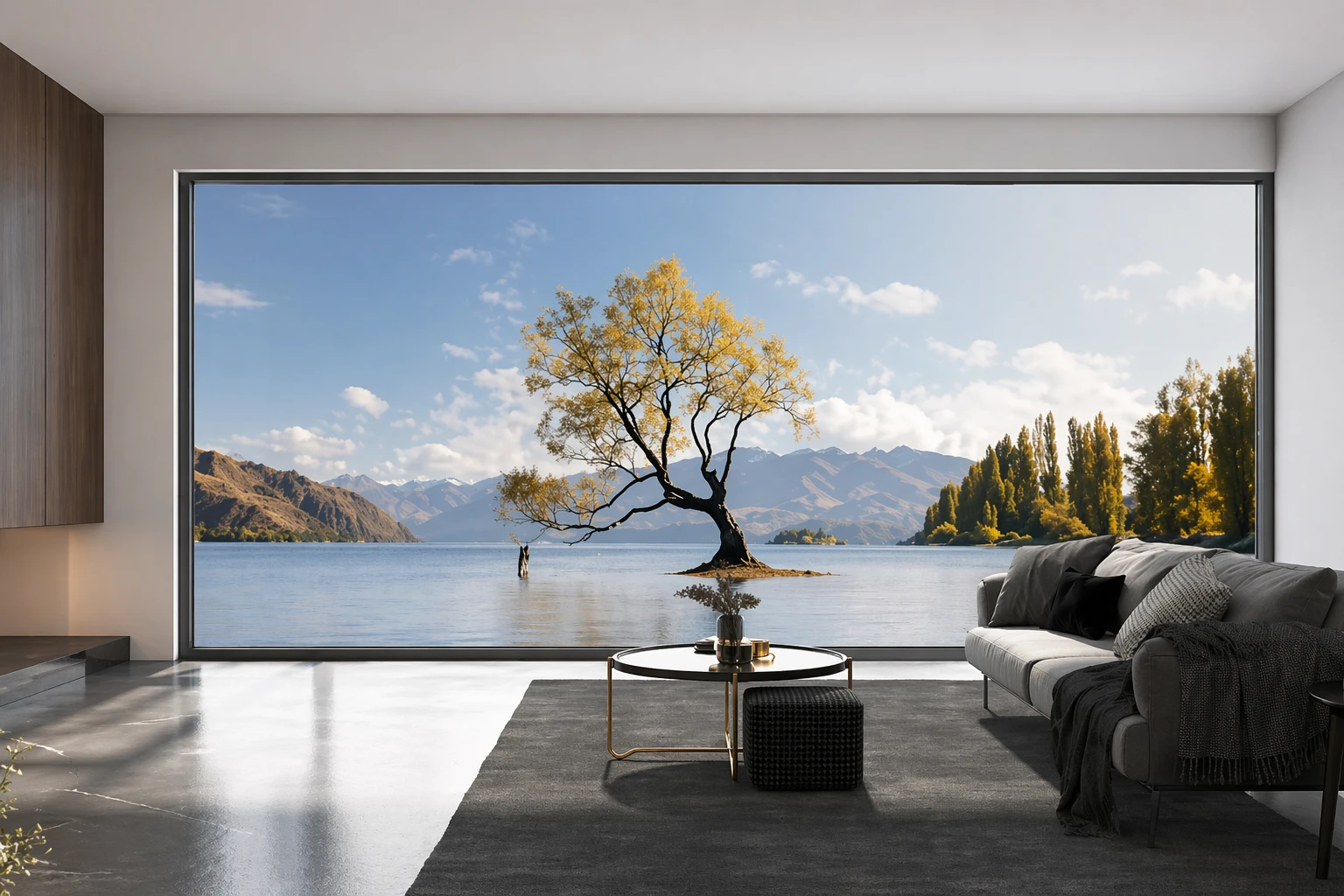
Line the answers up side by side, one column per supplier, and treat any gap in evidence as a cost or a risk. Put the same window schedule in front of each of them and choose on documented scope rather than on the lowest headline price. Our fixed aluminium windows page is a useful starting point for fixed-glass options.
Our Products
Fixed Windows
View system
Awning Windows
View system
Sliding Windows
View system
Sliding Doors
View system
Stacker Doors
View system