
Window Types
Are Aluminium Louvre Windows Worth It? The Honest Answer
By Sheng Xu · 14 August 2026
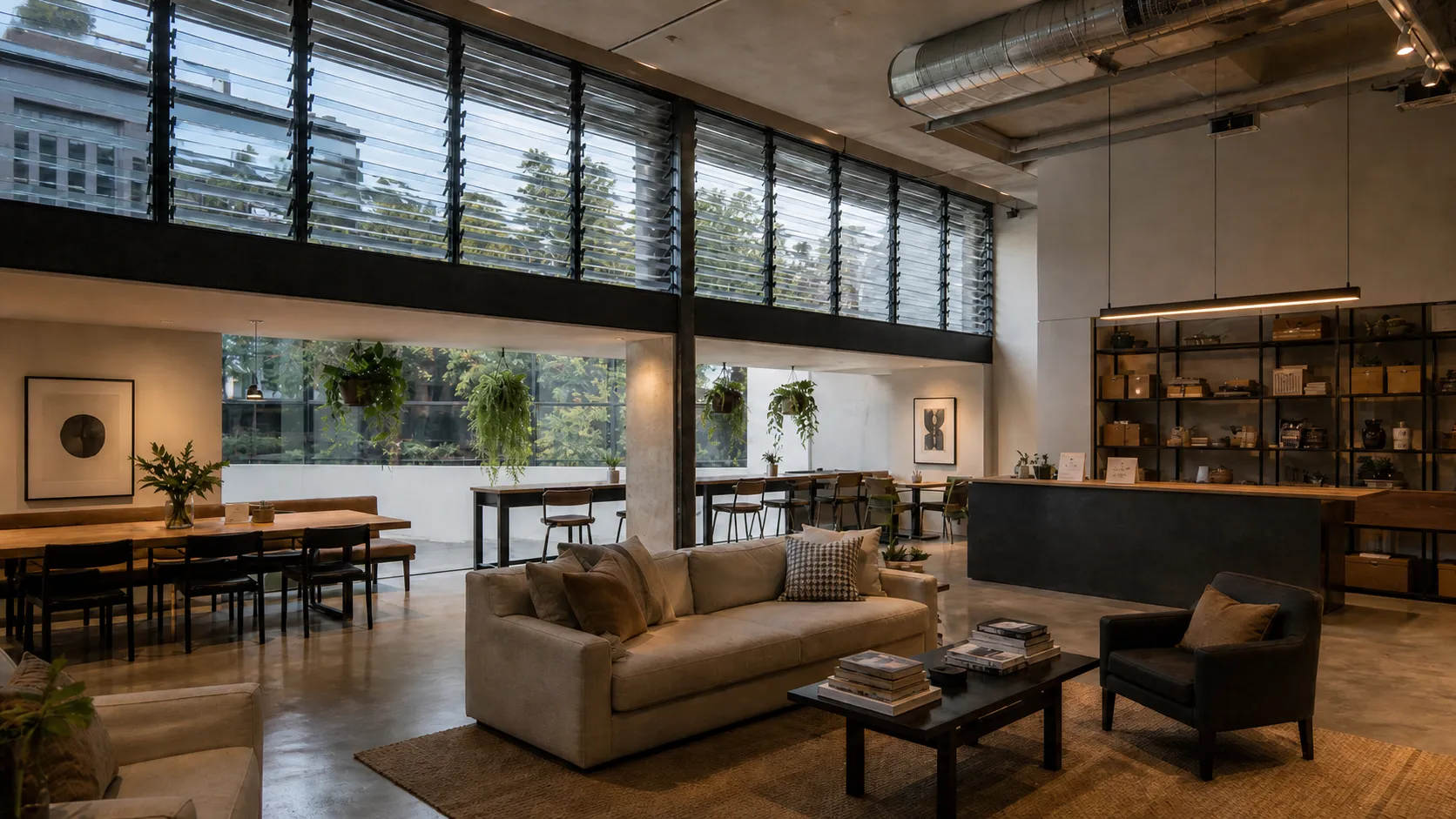
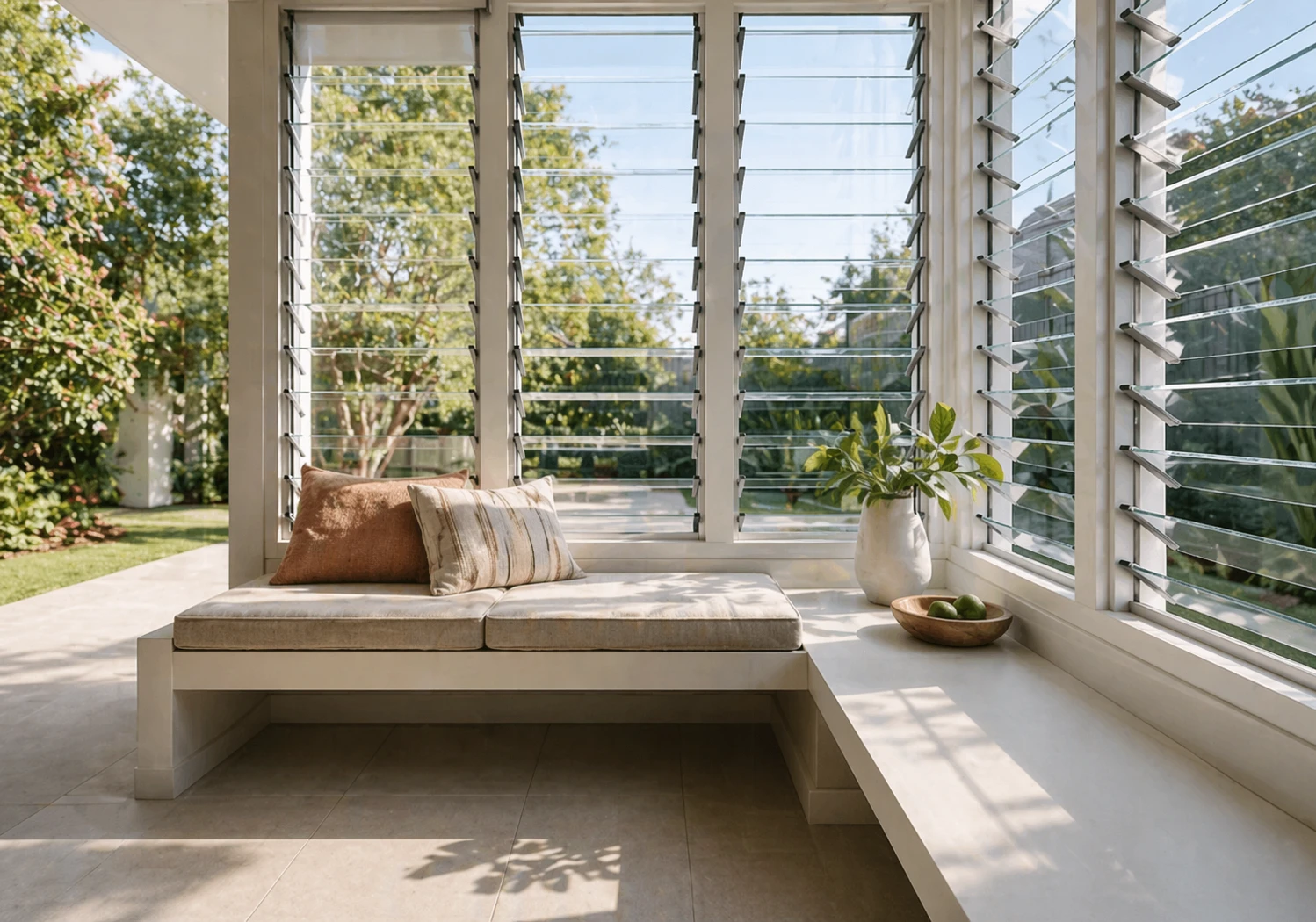
Aluminium louvre windows are built from horizontal glass or aluminium blades pivoting in an aluminium frame, all opened together from a single lever. They move more air than any other window type in Australia, opening around 90 per cent of their face to airflow, at the cost of tighter sealing, sound insulation and energy performance. They suit bathrooms, kitchens and warm climates where ventilation matters more than a perfect seal.
Aluminium louvre windows are a row of horizontal glass or aluminium blades set in an aluminium frame, all rotated together by a single lever. The blades can sit anywhere from fully shut to almost flat, so you can aim the air up, down or straight through the room. Toughened glass blades are the usual choice, 6 millimetres thick in 102 or 152 millimetre depths, and the frames are the standard 125 millimetre aluminium sections found across Australian homes and commercial buildings.
What are aluminium louvre windows?
The design exists for one reason: airflow. When a louvre opens, the blades lie flat and the whole face of the window becomes open air, where a casement or awning sash still blocks part of the opening. That is why louvres are the traditional pick for bathrooms, laundries and kitchens in Queensland and northern Australia, where moving humid air matters more than a perfect seal.
The catch is that the same design gives back what other windows are good at. Because blades cannot compress against a frame the way a hinged sash does, closed louvres are less airtight, less quiet and less insulating. This guide is about that one trade-off: airflow versus seal.
How much ventilation do louvre windows actually provide?
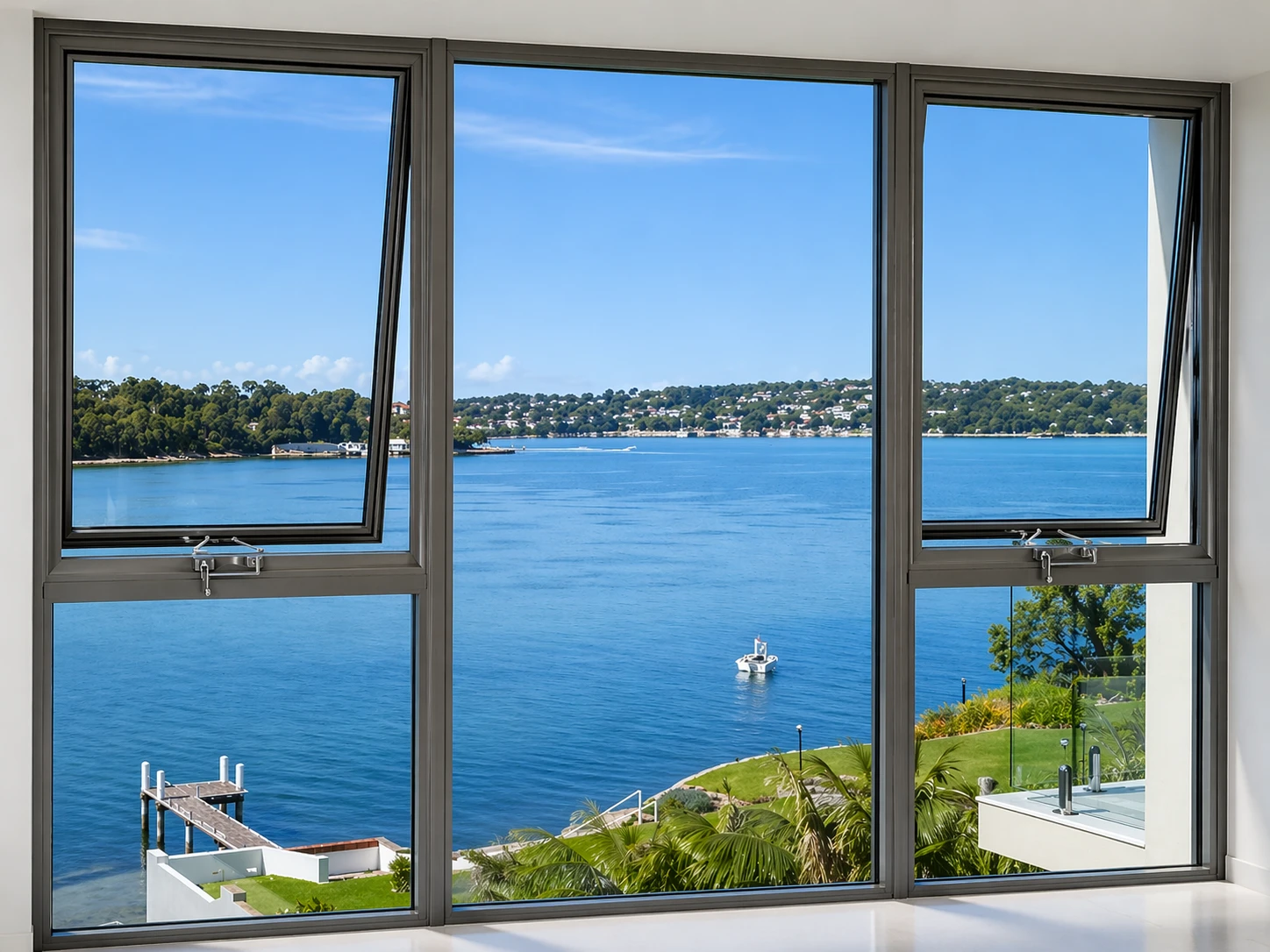
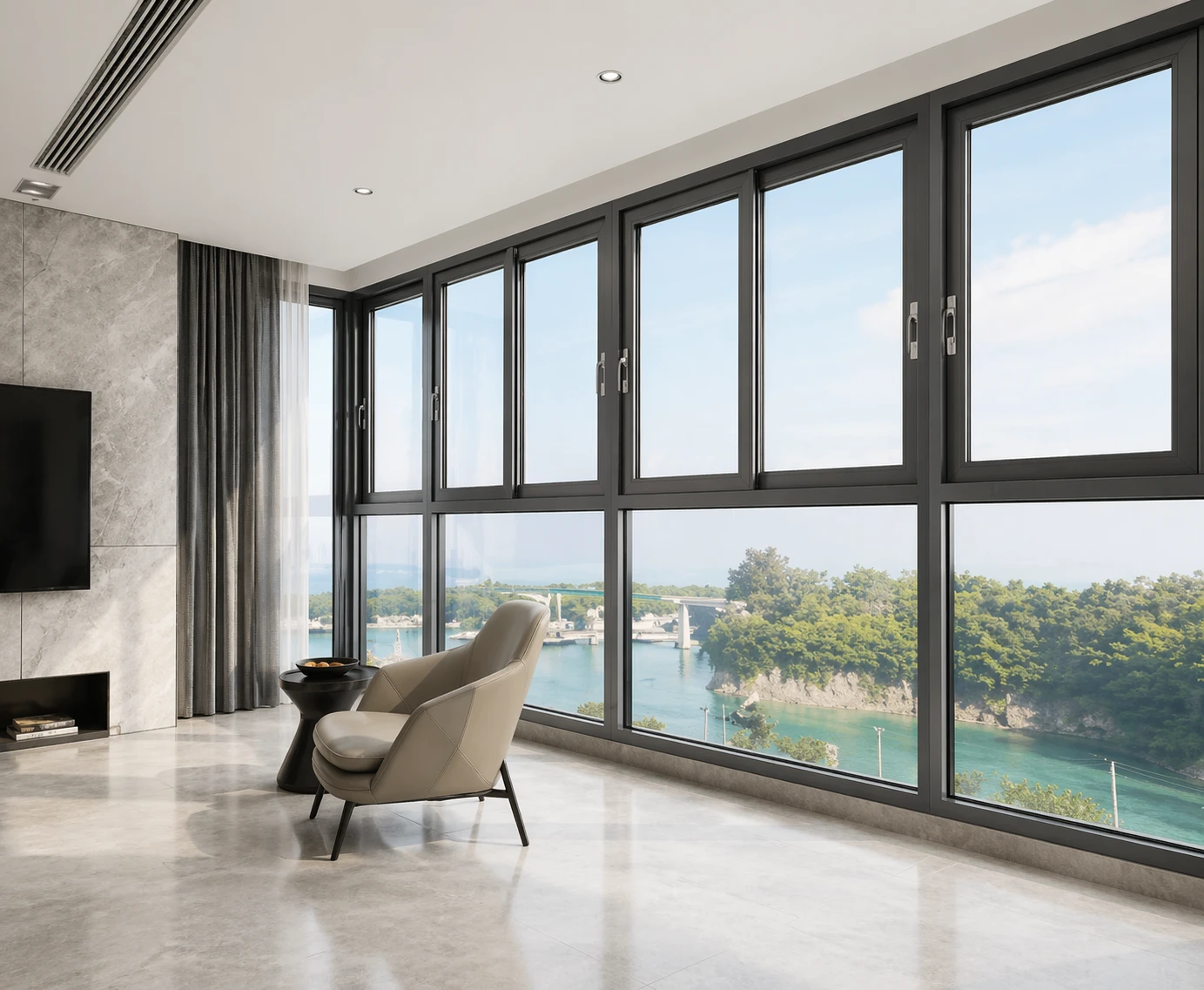
Measured against every other window type, louvres sit at the top of the ventilation table. The Australian Government's YourHome guide lists the maximum openable area of each type as a share of the window: casement 95 per cent, louvre 90 per cent, tilt-and-turn in turn mode 95 per cent, sliding 45 per cent, double hung 40 per cent and awning just 20 to 30 per cent. The louvre-versus-awning gap of more than 60 points is the most useful single number in this comparison.
Louvres keep that airflow regardless of wind direction, which not every window can claim. A casement sash that opens into a breeze funnels it inside, but the same sash shields the opening when the breeze comes from the other side. Louvres and sliders are indifferent to direction, which makes them dependable in a home where the breeze changes over the day.
Blade angle adds the control. Tilting blades low pushes cool air toward the floor; tilting them high draws warm air out at the ceiling, which is how louvres support stack-effect cooling in warm climates. The bathroom version of the same trick is why they are so common there: open a louvre a crack and air still moves past both sides of every blade, so you get ventilation without giving up privacy.
The scale of the difference is worth stating plainly. A technical bulletin from louvre manufacturer Breezway calculates that replacing sliding windows with identically sized louvres or casements almost doubles ventilation, and replacing awnings with louvres raises total ventilation by more than 600 per cent. Treat the exact figures as directional, but the pattern holds across every source.
What are the downsides? The noise, thermal and sealing trade-offs
The honest trade-off: the blade gaps that make louvres the best ventilator also make them the weakest sealer. Closed louvres let in more sound, leak more heat and draw more draughts than a compression-sealed casement or awning, which is why practitioners keep steering people away from them for bedrooms and cold climates.
Sound is the clearest loss. An experimental study of a glass louvre window found that even fully closed it attenuated only about 12 per cent of incoming noise, with the best performance in a narrow frequency band rather than across the range. It is why the forum consensus is blunt: louvres are no good as a noise barrier, and if you want to block noise, louvres are not the best choice.
Thermal performance follows the same pattern. Whole-window U-values for aluminium louvre systems span roughly 2.4 to 6.9 W/m2K depending on the glazing chosen, and a single 6 millimetre aluminium blade measures around 6.5 on its own. The same size low-e glass blade drops to about 4.4, which is the cheapest single lever available if insulation matters.
The old reputation is worse than the current product. The draughty louvres people remember came from timber frames and loose blades; modern aluminium systems with sealed clips shut considerably tighter, and owners on Australian building forums report that these days they seal well and are not drafty at all.
Can louvre windows be double glazed?
The answer has changed. For decades the honest answer was no, and that was the standing reason louvres underperformed on energy: laminates risked delaminating in the blade clips, and the extra weight strained the pivots. Double-glazed louvre systems now exist, so the correct answer in 2026 is yes, and it changes the energy story.
The current systems work by making the blade itself a slim double-glazed unit. Breezway's IGLU blade, for example, is a 22 millimetre assembly of 5 millimetre low-e glass, a 12 millimetre argon-filled cavity and another 5 millimetre low-e pane, sealed blade-to-blade rather than held in a thermally compromised frame, and it carries a Window Energy Rating Scheme rating. YourHome, the same government source as the opening table, notes plainly that double glazed louvres are now available, and more products are likely to follow.
Before committing to double-glazed blades, know the cheaper step: swapping aluminium blades for low-e glass blades roughly halves blade-level U-value, from about 6.5 down to 4.4, with no change to the frame or mechanism.
The bigger point is that single glazing is not automatically the wrong choice, because louvres change the energy equation at the whole-house level. A Sydney modelling study found a building using louvres for natural ventilation needed 37 per cent less cooling energy than an identical fixed-window building, used more heating energy off a small base, and ended up 23 per cent lower in total annual energy. The ventilation saving outweighed the sealing penalty in a warm climate. The study was commissioned by Breezway, so treat the percentages as directional rather than absolute.
Are louvre windows secure?
Security on a louvre is a hardware question, not a design question. An unlocked louvre can be opened from outside, and glass blades can be slid out of their clips, so the honest answer depends entirely on the locks and screens the window carries.
The warning is an old one and it has not gone away. Practitioners on Australian building forums describe it plainly: you can take the glass panes out from the outside if they are open, and you do not need to smash open louvres to get in, because you can just slide the glass out. A ground-floor louvre left unlocked is a genuine exposure.
Modern systems close most of the gap. Keyed locks are standard on quality louvre handles, security screens in mesh or bar form protect the window whether it is open or closed, and laminated or security glass hardens the blades themselves. The owner's decision rule is simple: ground-floor louvres get keyed locks plus a screen, exactly as a ground-floor casement would.
What louvres add that other windows cannot is fall safety without losing airflow. Australian rules cap most openable window openings in upper floors to a 125 millimetre sphere, and a casement or awning that complies has given up most of its ventilation. A louvre's blades stay within the limit while the window still moves air, which is why they appear in schools and upper-floor bedrooms.
Do louvre windows leak? Water, weather and cyclone reality
Louvres handle light rain well and heavy weather badly. Angled blades shed gentle rain while still ventilating, which is why bathrooms and Queensland homes use them, but in high wind-water conditions water can come through, and Australian Standards allow louvres a leeway no other window type gets.
The standard treats louvres differently on water. Rather than requiring the same tight seal as other windows, Australian Standards allow louvres a contained cascade of water to the inner face, and in certain high wind-water gusting conditions even quality systems can push water beyond the frame. Rylock, a national fabricator, puts it in writing: use louvres only where wet floors are temporarily acceptable after storm-like conditions.
The practical number to compare is the water penetration rating, which is why louvre specifications list one. Entry-level systems cluster around 300 pascals, mid-range systems around 450, and the highest tested reach 620. Know the rating for your area before you pick.
Cyclone and bushfire areas add their own rules. In cyclone zones louvre systems must be rated for the design wind pressure or sit behind a rated shutter, and impact-resistant glass carries a real cost premium. Bushfire sites layer on requirements under the BAL system. A certified louvre is not a given, so ask for the tested configuration that matches your site.
Are aluminium louvre windows right for your home?
Choose louvres for bathrooms, laundries, kitchens and warm-climate cross-ventilation, where airflow beats airtightness. Choose awning or casement for bedrooms on noisy streets, air-conditioned homes in cold climates, and anywhere a tight seal matters more than a breeze.
The rooms where louvres are the obvious answer are stable across every guide: bathrooms and laundries that need steam out, kitchens that need cooking air out, and alfresco, verandah and Queensland rooms built around breezes. Above a door is a quieter specialist use, because louvres can stay open while the door below stays locked.
The avoid-list is just as clear: bedrooms near traffic, rail or flight paths because of the acoustic loss; cold inland climates because of infiltration and U-value; and ground-floor street-facing rooms fitted without a security screen.
Louvres generally cost more than a basic sliding window. Practitioner threads price them around double a plain unit and report a few thousand dollars of uplift on a mid-size job, though ranges vary widely with size, blade and whether they are motorised. When you do spec them, ask for WERS-rated blades, thermally broken frames where energy matters, and the tested AS2047 configuration rather than a generic compliant label.
Our Products
Louvre Windows
View system
Awning Windows
View system
Sliding Windows
View system
Fixed Windows
View system
Sliding Doors
View system