Standards & Compliance
What is AS 2047 for windows and doors?
By Sheng Xu · 31 July 2026
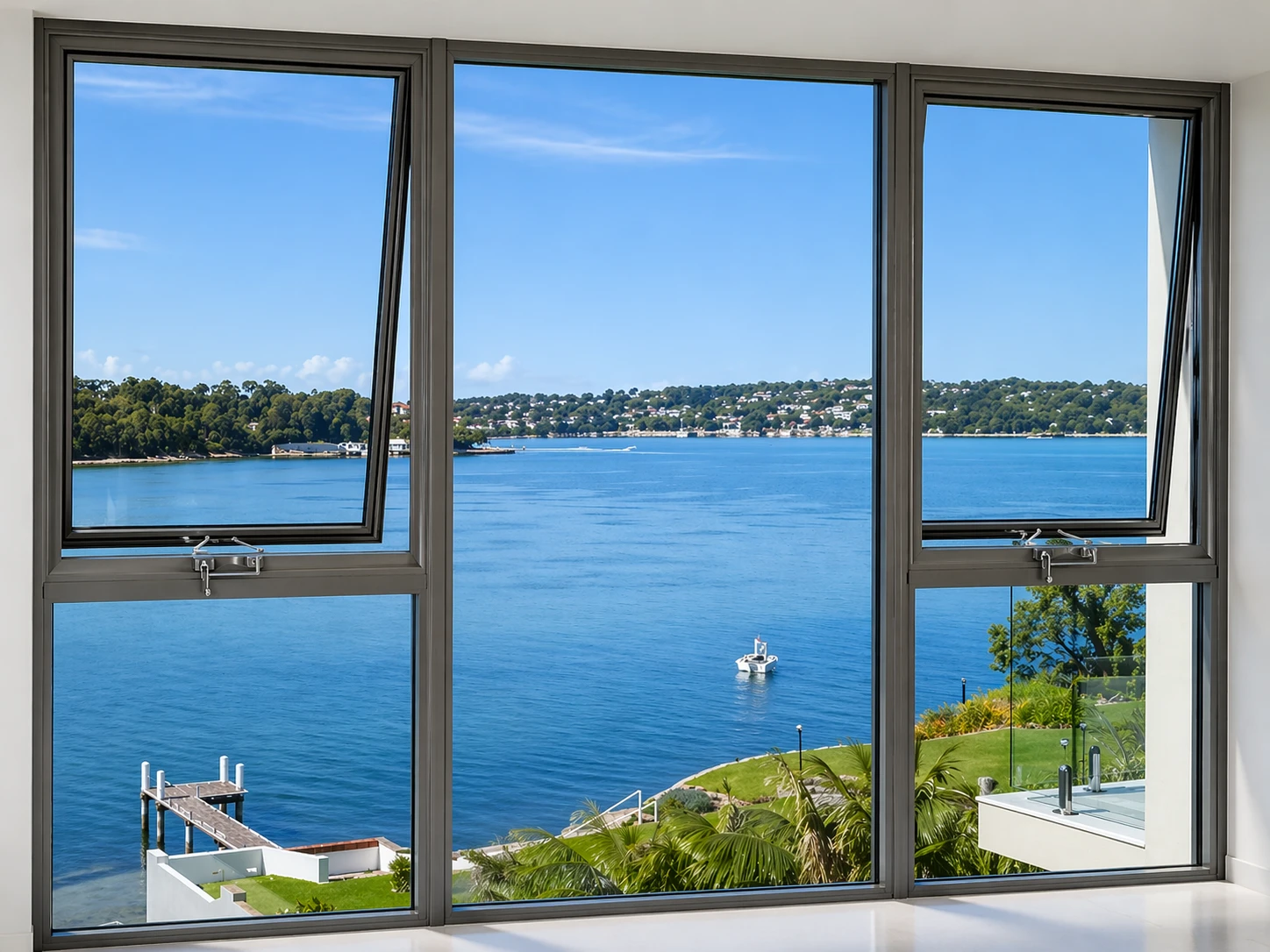
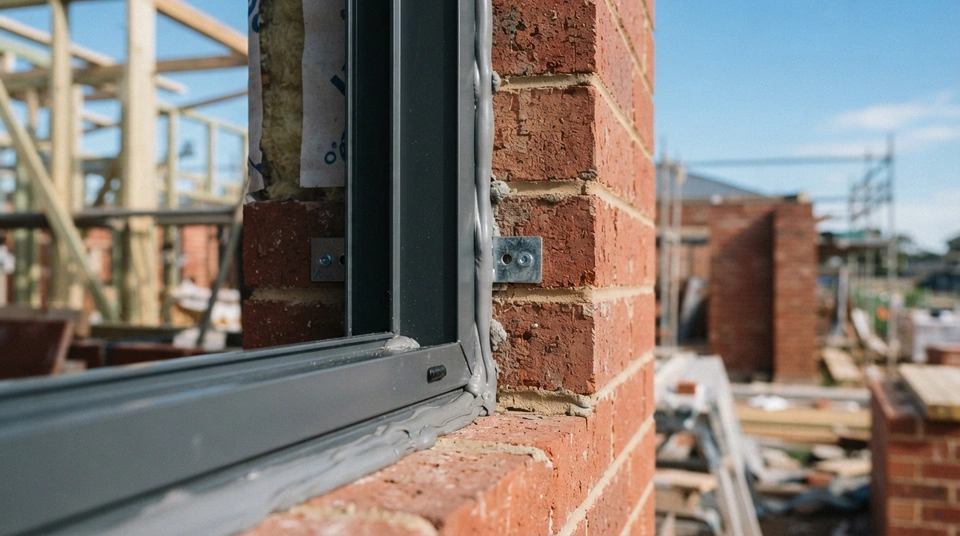
AI-generated illustrative image. Not a product test, certification record or project evidence.
AS 2047 is the Australian Standard for “Windows and external glazed doors in buildings”, currently AS 2047:2014. It sets the mandatory minimum specification for products used in Australia, and the National Construction Code references it, making compliance a condition of building approval.
AS 2047 is the reason the same window can be acceptable on one block and non-compliant on the next. The standard says less about how a window should look or what it should be made from than about how it must perform once it sits in an external wall, on a specific site, facing a specific set of wind and rain conditions. For anyone reading a quote, a window schedule or a certifier's checklist, it is the document that decides whether the product is allowed to be there.
What AS 2047 covers — and what it does not
The standard applies to glazed assemblies in the external wall of a building. Under the National Construction Code that means windows, sliding and swinging glazed doors with a frame including french and bifold doors, adjustable louvres, and window walls with one-piece framing. All louvres on the exterior of a building fall under AS 2047 regardless of what the blades are made from, so a metal-bladed louvre is treated the same way as a glazed one.
A defined group of assemblies sits outside the standard. Windows in other than the vertical plane, windows containing fixed louvres, windows constructed on site, architectural one-off windows, second-hand or recycled or replacement windows, heritage windows, and glazed doors without a frame are all exempt from AS 2047 testing. Revolving doors and any glazed assembly that is not in an external wall are outside its scope as well.
Exemption from AS 2047 is not exemption from compliance. AS 1288 still applies to those assemblies and still has to be certified, which is why a heritage window can be legitimately installed without an AS 2047 label but cannot be installed without appropriate glass selection. One practical consequence catches people out regularly: a window with permanent ventilation cannot pass the AS 2047 water penetration test and is therefore not an AS 2047 window. Where a bathroom or toilet needs permanent ventilation, a proprietary hooded vent is the usual way around it.
The five tests behind an AS 2047 rating
Performance claims under AS 2047 are verified by physical testing to the AS/NZS 4420 series, which sets out the test sequence, sampling and test methods. A sample assembly is put through five tests and the results are checked against the criteria in AS 2047 for the relevant building classification. Housing and Class 2 to 9 residential and commercial buildings are assessed against different clauses, and Class 10 buildings such as garages and carports are not required to pass the air infiltration and water penetration requirements at all.
Deflection test
Positive and negative pressures are applied to the assembly to measure how far it deflects under wind load. This is the serviceability check. The window is not expected to break, but it is expected to hold its shape well enough that seals keep working, sashes keep operating and glass stays properly supported.
Operating force test
An opening sash has to open and close without undue effort. It reads as a comfort measure, and for elderly occupants or anyone with limited mobility it is, but it also works as a manufacturing check. A sash that binds usually points to a frame that is out of square or hardware that is misaligned.
Air infiltration test
Air leakage through the closed assembly is measured and capped. Uncontrolled leakage undermines heating and cooling performance and acoustic performance alike, so this test underpins what a window can claim about energy efficiency and noise long before any energy rating is calculated.
Water penetration resistance test
Water is applied under pressure to confirm that none passes through the assembly into the building at the required test pressure. This is the result that most often decides whether a system suits an exposed or coastal site, because the pressure the product has to resist rises with site exposure.
Ultimate strength test
Positive and negative pressures are increased to confirm the assembly does not fail at the required wind pressure. Deflection asks whether the window still works; ultimate strength asks whether it still holds together. It is the occupant safety test, and it is the reason wind classification carries the weight it does.
How a wind rating reaches your window
An AS 2047 rating means very little without a site attached to it. The standard expresses performance as two wind pressures — serviceability limit state and ultimate limit state — together with a water penetration resistance figure, and those numbers only become meaningful once they are matched to the conditions of the particular block the building sits on.
For housing, AS 2047 requires window ratings that use design wind speeds for Class 1 and Class 10 buildings to be determined in accordance with AS 4055 Wind loads for housing, which produces the familiar N and C ratings. For Class 2 to 9 buildings, and for Class 1 and 10 buildings that fall outside the limits of AS 4055, design wind pressures have to be calculated in accordance with AS/NZS 1170.2 instead. In Queensland that calculation is a professional engineering service and must be carried out by a Registered Professional Engineer of Queensland.
Site exposure then adjusts the requirement upward. AS 2047:2014 treats a site as exposed where any one of three AS 4055 conditions is met: terrain category TC2 or lower, topographic class T3 or higher, or no shielding. Exposed sites call for higher water penetration resistance than the base rating alone would suggest. In cyclonic regions, a window positioned close to an external corner of the building faces higher pressures than the same window in the middle of the same wall, because that is where wind pressure concentrates.
Who is responsible for nominating the wind rating?
This causes more disputes on site than anything else in the standard, and the answer is consistent across AS 2047 Appendix C and the National Construction Code: the site rating is not the window manufacturer's to determine. It should be calculated and supplied by the project's site engineer, or by the architect, designer or builder. The manufacturer then supplies product to the rating it has been given, along with the exposure classification for the site.
The failure mode is predictable. Where nobody takes ownership of site classification, product gets ordered against an assumed rating, is installed, and performs exactly as tested — which is to say, to a lower standard than the site actually demands. The consequences surface in the first serious storm, and by then the paper trail that would establish who specified what has usually gone missing. Builders who request the site rating in writing before ordering avoid the entire problem.
How to check a window is genuinely AS 2047 compliant
Three documents substantiate an AS 2047 claim, and they do different jobs. A supplier saying a product is compliant is a statement. These are the evidence.
The performance label
Window assemblies for housing must be labelled, and the label has to be positioned so the window can still be identified once it is in place. Timber windows for housing, and assemblies for buildings other than housing, must either be labelled or be supplied with a certificate. Either way the required information is the same: manufacturer identification, the serviceability and ultimate limit state wind pressures, and the water penetration resistance. Where a window arrives with no AS 2047 or AS 1288 labelling and it should have it, the industry advice is blunt — do not use it, send it back.
The certificate of conformance
A certificate is a formal statement that the product meets the relevant standards and NCC provisions. It carries weight in proportion to what stands behind it, so a certificate issued under an accreditation scheme with independent auditing and NATA-accredited testing means considerably more than one a supplier has written for itself. It is a reasonable question to ask which scheme a certificate was issued under.
The test report
Ask for the test report whenever there is doubt about a label or a certificate. The report is the underlying evidence: it records the assembly that was tested, the pressures applied and the result against each criterion. It is also the only one of the three documents that shows whether the tested sample actually resembles the product being supplied.
What AS 2047 certification looks like at SMIRO
SMIRO holds a CSi PAS-Mark Certificate of Conformance to AS 2047:2014, confirming that the manufacturing process is capable of consistently producing windows and external glazed doors in compliance with the standard, supported by product compliance schedules for each series. Those documents sit alongside certification to AS 4666 for insulating glass units, documentation for AS/NZS 2208 safety glazing, and ISO 9001 for the quality management system. All of them are published as downloads rather than described in a sentence.
The tested figures are published as well. Each product family lists its design serviceability pressure, ultimate limit state pressure and design water resistance, so a fixed window is shown at 800 Pa design serviceability in the Living and Vista series and 1200 Pa in the Comfort and Urban series, against 5300 Pa ultimate limit state across the range. Design water resistance is listed per series in the same way. These are the numbers a certifier or an energy assessor needs in order to check a system against a nominated site rating, and they are what to compare when one supplier's quote looks cheaper than another's.
What a published figure cannot do is classify a site. A tested pressure tells you what an assembly has been proven to withstand; matching that to an N or C rating for a specific address depends on the site rating supplied with the project. The two have to be read together, and that comparison belongs in the specification stage rather than after delivery.
AS 2047 and the standards around it
AS 2047 does not work alone. It incorporates compliance with AS 1288 Glass in buildings, which governs how glass is selected and installed — type, thickness, human impact zones and safety glazing requirements. AS/NZS 2208 covers safety glazing materials themselves, and AS 4666 covers insulating glass units, the sealed cavities used in most double glazed and higher-performance systems.
Two further standards feed into AS 2047 rather than sit beneath it. AS 4055 and AS/NZS 1170.2 produce the wind loads that define what a window has to withstand, and the AS/NZS 4420 series provides the test methods used to prove it does. Reading a compliance pack is largely a matter of recognising which document answers which question: AS 2047 for the assembly, AS 1288 for the glass, AS 4055 or AS/NZS 1170.2 for the site, and AS/NZS 4420 for the testing.
AS 2047 does not measure energy efficiency
This is the distinction missed most often. AS 2047 proves structural and weather performance. It says nothing about how much heat a window lets through, and a fully compliant window can still fail an energy assessment.
Energy performance runs on a separate track: U-value for insulation, solar heat gain coefficient for radiant heat from the sun, whole-of-window ratings through WERS, and compliance demonstrated under NatHERS and the energy efficiency provisions of the NCC. A specification needs both streams satisfied. Treating an AS 2047 certificate as evidence of energy performance, or a good U-value as evidence of structural compliance, is how projects arrive at the certifier's desk with a full folder of the wrong documents.
Installation is part of compliance
A compliant window installed badly is not a compliant outcome. The NCC housing provisions set installation requirements alongside the product standard: structural building loads must not be transferred to the window assembly, and a minimum 10 mm gap must be left between the top of the assembly and any loadbearing framing or masonry wall element. That gap may need to be larger to allow for frame settlement over wide openings.
Where packing is used between the assembly and the frame, it has to be located along each side and the bottom, fixed so the sides and bottom stay straight, and kept clear of flashing material. Assemblies should be installed square, plumb and with equal diagonals. These are the details site inspections pick up, and they decide whether the water penetration resistance the product was tested to survives contact with the building.
What happens when windows do not comply
The immediate consequences are administrative. Certifiers ask for AS 2047 documentation before signing off, inspectors check compliance paperwork on site, and councils or private certifiers confirm compliance before an occupancy certificate is issued. Missing documentation stops all three.
The longer consequences are physical and financial. Product that is not designed, manufactured and installed to the relevant standards can let weather into the building, damaging other building elements and creating the conditions for mould. Replacement after the fact is expensive, disruptive and frequently disputed, and insurance or warranty positions become harder to sustain once non-compliance is established. Regulator inspections in both metropolitan and regional areas have found significant numbers of window frame assemblies carrying no labelling at the time of inspection, which suggests the gap between documented compliance and actual compliance is wider than the paperwork implies.
Frequently asked questions
Is AS 2047 mandatory in Australia?
Yes, for windows and external glazed doors in the external wall of a building. The National Construction Code references AS 2047 as the way to satisfy the relevant performance requirements, which makes compliance a condition of building approval. An architect or owner cannot specify requirements that fall below the standard, although they can specify requirements that are more stringent than it.
Which windows and doors are exempt from AS 2047?
Windows that are not in the vertical plane, windows containing fixed louvres, windows constructed on site, architectural one-off windows, second-hand or recycled or replacement windows, heritage windows, and glazed doors without a frame. Revolving doors and any glazed assembly that is not in an external wall sit outside the scope as well. AS 1288 still applies to all of them.
What is the difference between AS 2047 and AS 1288?
AS 2047 tests the window or door as a complete assembly and covers how it performs against wind, water and air once it is in a wall. AS 1288 governs the glass itself: which type, what thickness, where safety glazing is required and how it is installed. AS 2047 incorporates compliance with AS 1288, so a compliant window needs both.
Where is the AS 2047 label on a window?
On the assembly itself, positioned so it can still be read once the window is installed, which usually means the inside of the frame or head. It must carry manufacturer identification, the serviceability and ultimate limit state wind pressures, and the water penetration resistance. Timber windows for housing and assemblies for buildings other than housing may carry a certificate in place of a label.
Does AS 2047 cover energy efficiency?
No. AS 2047 covers structural performance, water penetration resistance, air infiltration and operating force. Energy performance is assessed separately through U-value and solar heat gain coefficient, rated through WERS, and demonstrated under NatHERS and the energy efficiency provisions of the NCC. The air infiltration test is the only point where the two meaningfully overlap.
Do imported windows have to comply with AS 2047?
Yes. The standard applies to the product going into an Australian building, not to where it was made. Imported systems need the same testing, labelling and supporting documentation as locally manufactured ones. It is worth confirming before ordering that the certification an overseas manufacturer holds is recognised in Australia and that the tested assembly matches what will actually be supplied.