
Glazing Performance
What is U-value in windows?
By Sheng Xu · 19 July 2026
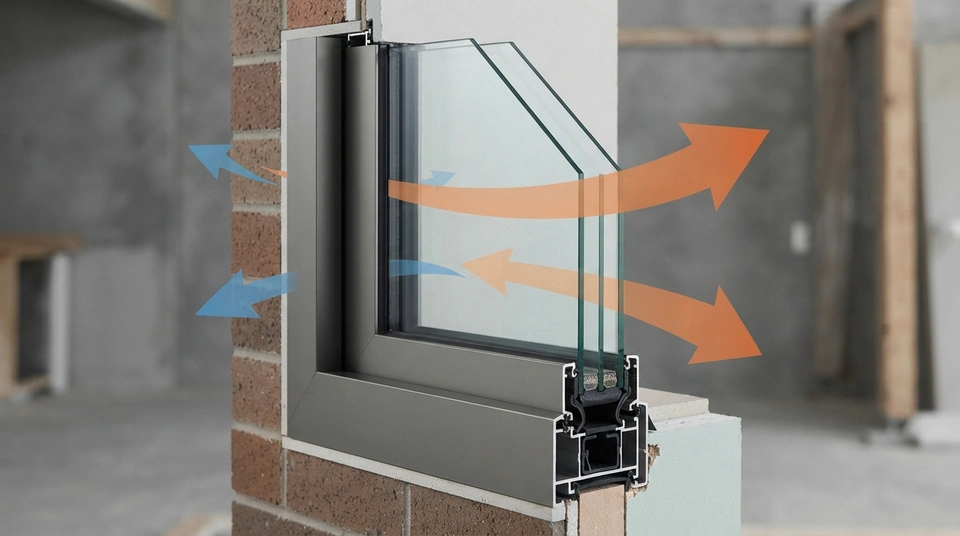
AI-generated illustrative image. Not a product test, certification record or project evidence.
U-value measures how quickly heat conducts through a window — the whole assembly, including the glass, frame, seals and spacers, not the glass alone. It is expressed in watts per square metre per kelvin (W/m²K), and a lower number means better insulation. In Australia it is the one figure on your energy report that you cannot exceed.
Most people meet U-value at an awkward moment: a NatHERS or BASIX energy report has landed with two numbers set against every window, or a supplier's quote lists a figure with no explanation of what it covers. Windows are where the stakes sit — almost 90 per cent of a home's unwanted heat is gained, and up to 40 per cent of its heating energy lost, through glazing. This article explains what the number means, what counts as good in Australia, and why published figures so often disagree.
What U-value measures
U-value, sometimes written U-factor or thermal transmittance, is the rate at which heat passes through a building element. For windows it is expressed in watts per square metre per kelvin, written W/m²K. The unit is easier to read than it looks: a window rated at 1.4 W/m²K transmits 1.4 watts through every square metre of its area for each degree of temperature difference between inside and outside. Double the temperature gap and you double the heat flow.
It describes conducted heat only, and it works in both directions. In winter, warmth conducts out through the glass and frame; on a hot afternoon, heat conducts in. Radiant heat arriving directly from the sun is a separate mechanism, measured by the Solar Heat Gain Coefficient.
Australian window products generally sit between 2.0 and 10.0 W/m²K. Lower is always better for insulation, and unlike its companion metric there is no climate in which a higher U-value is the goal.
Why only the whole-window number counts
The most common error in window energy claims is treating U-value as a property of the glass. It is not. The rating that matters describes the entire assembly — glass, frame, seals and any spacers working together.
Technical literature distinguishes three values. Uw is the whole window. Uc, sometimes written Ug, is the value at the centre of the glass. Uf is the frame alone. Because the whole-window figure is the one that governs both performance and compliance, the industry abbreviates it to a plain U — which is where the confusion starts.
The gap between them is not academic. Glass can be excellent while the assembly is ordinary, because aluminium conducts heat readily and a frame without a thermal break becomes a bridge straight through the wall. A supplier quoting 1.3 for the glazing is not offering a window that performs at 1.3.
So there is one question worth asking of any figure you are handed: is that a total system value, or glass only? A quote that cannot answer it is not a specification.
Terminology varies more than the requirement does. The National Construction Code notes that assessors working to Australian Fenestration Rating Council procedures may write U-factor, Uw or Total System U-Value for the same quantity. Whichever label appears, the value has to combine glass and frame.
What counts as a good U-value in Australia
In the Australian context, a window below 4.0 W/m²K is generally treated as a low U-value product. That threshold sounds unambitious next to European numbers, and it is: Australian window stock is overwhelmingly aluminium framed, so the benchmark reflects what the market supplies rather than what physics permits.
Real products span a wide band. Single glazing in an aluminium frame typically lands in the fives and sixes. Conventional double glazing in a standard aluminium frame improves matters but often still sits in the threes or high fours, because the frame limits what the second pane can achieve. Add a thermal break and a Low-E coating and whole-window values in the low twos become realistic. High-performance systems reach around 1.
For a sense of how much room is left: in 2022, only around 11.3 per cent of new Class 1 dwellings in Australia used windows below that threshold. Low U-value glazing is still a specification decision, not a default that arrives with the quote.
Treat every figure here as indicative: a project value comes from the tested configuration you actually order.
Why published U-value figures disagree
Search for typical U-values and the numbers will not line up. For the same description — double glazed, aluminium frame — reputable Australian sources publish figures ranging from roughly 2.4 to 4.8 W/m²K. That spread is wide enough to decide whether a window passes or fails, so it is worth understanding why it exists.
Four things drive it. Some tables quote centre-of-glass values and some quote whole-window values, without saying which. The phrase double glazed covers everything from plain float glass in an untreated frame to Low-E glass with an argon fill and a warm-edge spacer, and those are several W/m²K apart. Many published tables carry no test basis and no date, so there is no way to know what was measured. And some figures originate under overseas rating conditions, so it is worth confirming which scheme produced a number before comparing it with one that came from another.
The practical conclusion is a filter you can apply to any claim. A U-value quoted without a named product, a stated glazing build-up and an identified rating scheme is marketing, not a specification.
Matching U-value to your energy report
Compliance reports produced by tools such as AccuRate, FirstRate, BERS Pro or BASIX specify two window figures: a total window U-value and a total window Solar Heat Gain Coefficient. Both are whole-window values.
The two are not policed the same way, and the asymmetry matters more than most people realise. The U-value of the window you install must be less than or equal to the figure specified — there is no tolerance and nothing to round. SHGC, by contrast, only has to fall within 10 per cent of its specified value. U-value is therefore the number with no headroom, and the one that should lead your selection.
There is a piece of latitude that surprises people. The frame material and glazing type printed on an energy report are indicative rather than binding; they show a typical product that would achieve the required numbers. Alternative systems that meet or better those numbers comply just as well. If the report nominates a material you did not want, the requirement to satisfy is the performance figure, not the material.
The Window Energy Rating Scheme is accredited by the Australian Fenestration Rating Council, so a WERS-rated product's published U-value is accepted for Code purposes. Ask for the certificate and keep it on file.
What changes a window's U-value
Three levers move the number, and they compound rather than substitute for one another.
The glazing build-up is the most familiar. A second pane of glass, then a Low-E coating, then an argon fill in the cavity, then a warm-edge spacer at the perimeter — each step reduces heat flow, and the gains accumulate.
The frame matters as much and is more often overlooked. Aluminium conducts heat far more readily than glass does, so an unbroken aluminium frame undermines whatever the glazing achieves. A thermal break — an insulating polymer section separating the inner and outer halves of the profile — interrupts that path. Research prepared for Sustainability Victoria found that moving the same Low-E, argon-filled glazing from a conventional aluminium frame into a thermally broken one improved whole-window U-value by around 11 per cent.
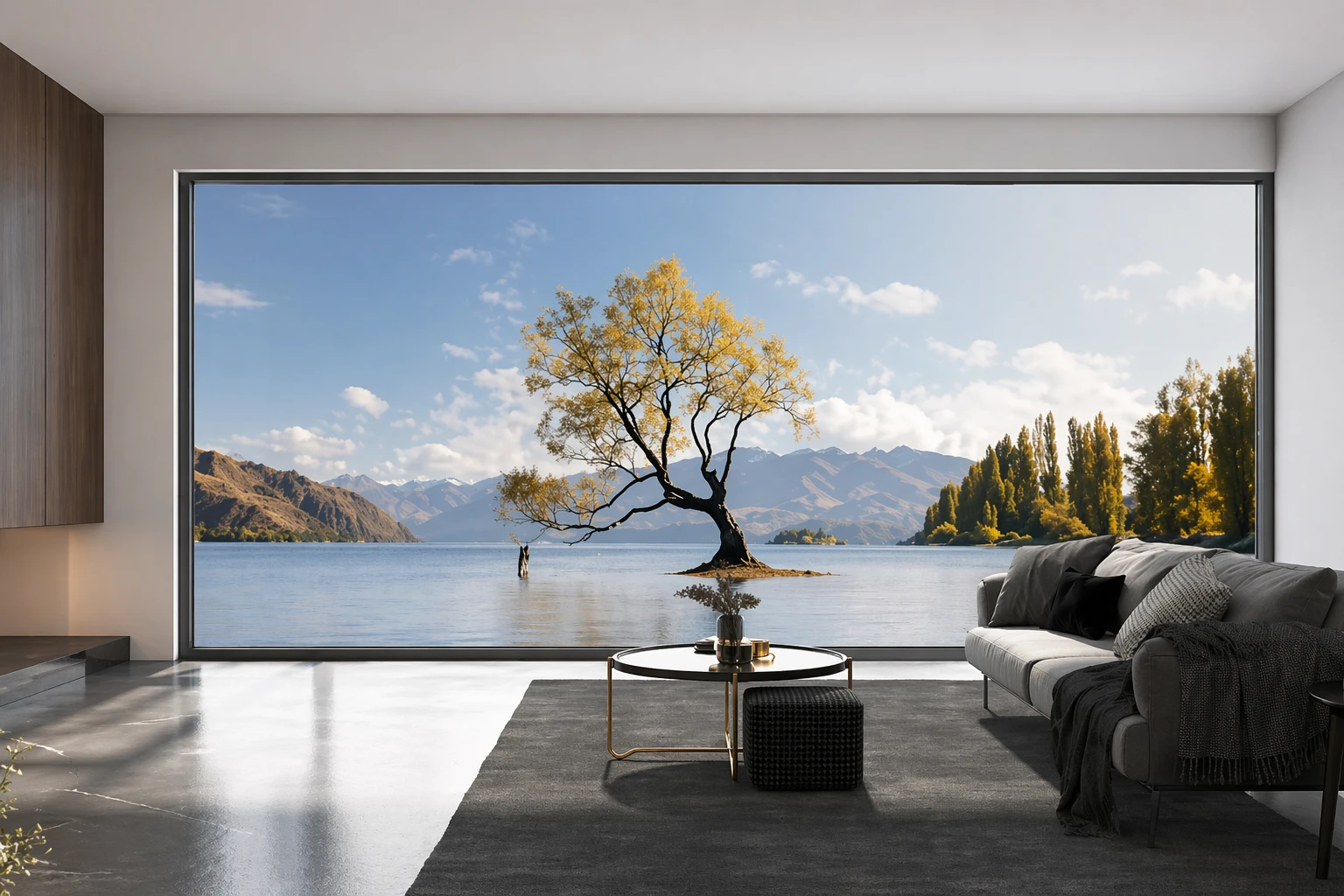
The third lever is geometry, and it is counterintuitive. Because frames perform worse than glass, the proportion of frame in an assembly changes the result. A large fixed pane usually returns a better whole-window value than a small one of identical construction, and a bifold or stacker door, carrying more frame and more meeting stiles, will not match a fixed window built from the same glass.
A low U-value is also felt, not merely filed. Better-insulating assemblies keep interior surfaces warmer, reducing the cold radiance near glass in winter and the condensation that forms wherever a surface drops to dew point.
Specifying U-value on your project
A workable glazing specification records more than a number. Alongside size, head and sill heights and opening type, it should state the whole-system U-value and SHGC and the product's WERS rating, with glass selection consistent with AS 1288 for safety and wind loading.
Four checks cover most of the risk. Take the U-value and SHGC targets from the energy report, not a brochure. Confirm every figure you are quoted is a total system value, not glass only. Check the product against its WERS listing rather than a marketing claim. And keep the certificate, because it records the exact make-up of the window if glass ever needs replacing.
If you already have a report in hand, it is usually faster to work backwards from the required numbers than to shortlist products and hope they comply.
Our Products
Fixed Windows
View system
Sliding Windows
View system
Sliding Doors
View system
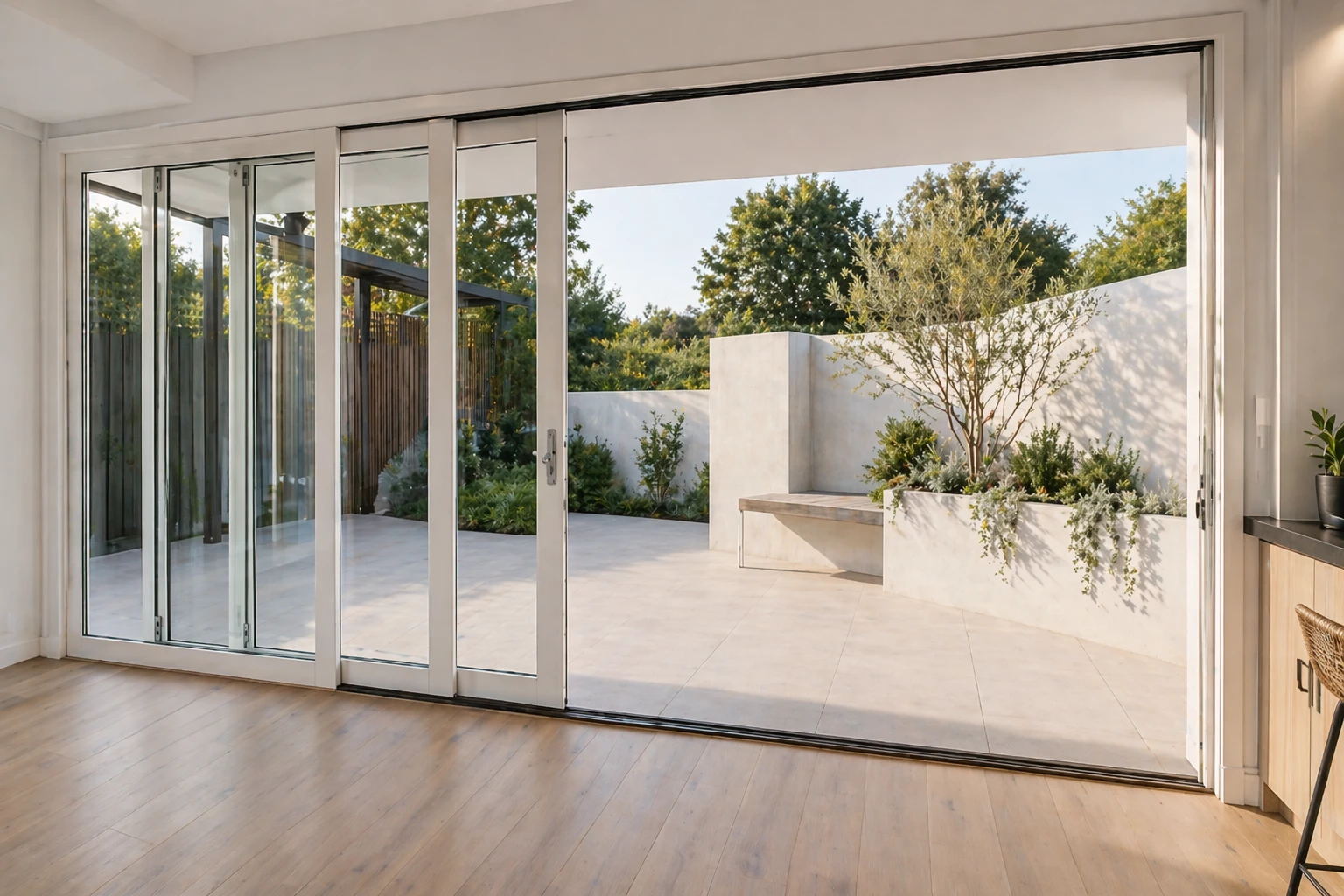
Stacker Doors
View system
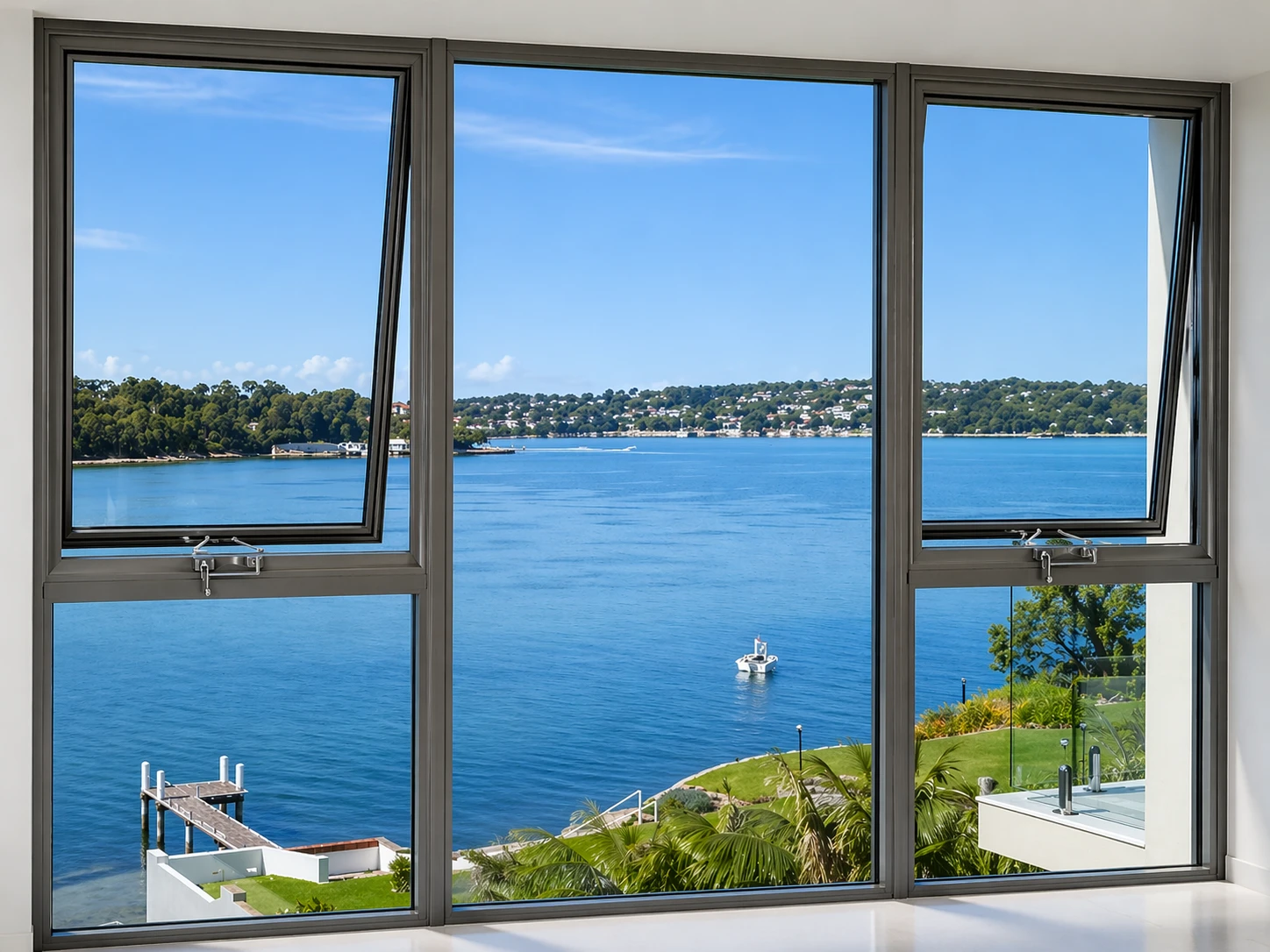
Awning Windows
View system