
Policy
What are Victoria's new draughtproofing standards for rental property windows and doors?
By Sheng Xu · 23 August 2026
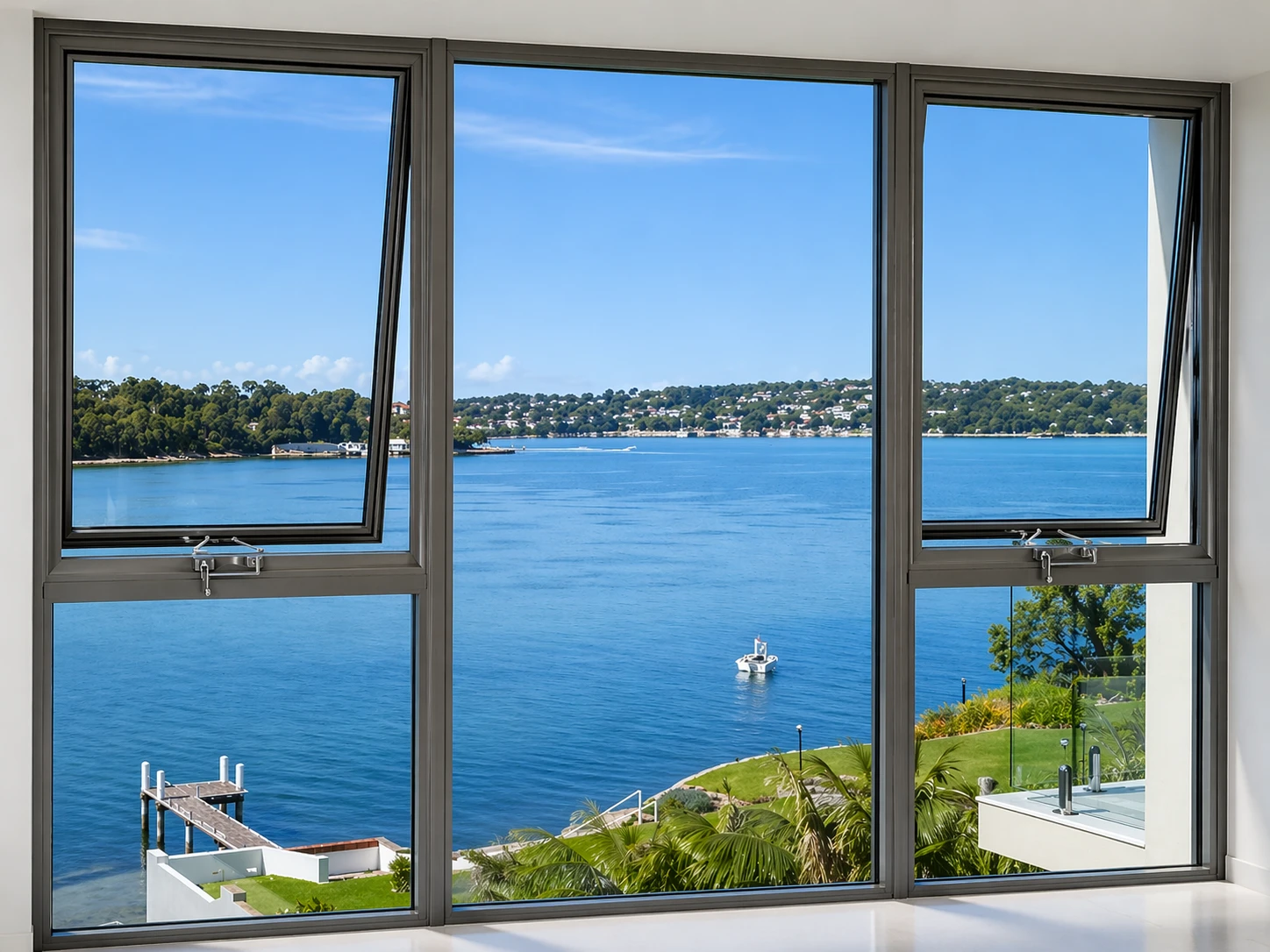
AI-generated illustrative image. Not a product test, certification record or project evidence.
New minimum energy efficiency standards for Victorian rental properties commence in phases from 1 March 2027. Specifically, from 1 July 2027, rental providers must draughtproof all external doors, windows, and unsealed wall vents using draught-sealing or weather-stripping products. This aims to reduce energy costs and improve comfort for renters, with landlords able to access Victorian Energy Upgrades (VEU) program discounts for compliance.
Victoria's rental minimum standards are undergoing their most significant expansion since 2021, and the new draughtproofing rules taking effect on 1 July 2027 place external windows and doors at the centre of landlord compliance. Under the Residential Tenancies Amendment (Minimum Energy Efficiency Standards) Regulations 2025, rental providers must fit weather-stripping or perimeter seals to all external doors and openable windows, and permanently seal unsealed wall vents. But behind the headline requirement sits a critical safety prerequisite: a mandatory gas safety check that legally halts all draughtproofing work if open-flued or flueless gas heaters are present. Here is what Victorian rental providers, property managers, and tenants need to know about the regulatory requirements, the gas safety rules, VEU government subsidies, and practical sealing solutions across different window and door types.
What Are Victoria's New Draughtproofing Standards for Rental Properties?
Commencing 1 July 2027, Victorian rental properties must meet a mandatory draughtproofing standard whenever a new residential rental agreement is signed or an existing fixed-term lease rolls into a month-to-month periodic tenancy (Consumer Affairs Victoria, 2026). The standard is part of the Victorian Government's expanded minimum energy efficiency reforms, designed to tackle the state's notoriously cold, leaky rental housing stock and lower household heating bills.
The regulation establishes three core physical requirements for the building envelope. First, all external doors must be fitted with sealing or weather-stripping products that restrict airflow around the entire perimeter of the door leaf without impairing its normal opening, closing, and latching operation. Second, all external windows must be fitted with weather-stripping or sealing products that restrict airflow around their entire openable perimeter, also without hindering operation. Third, all unsealed wall vents must be permanently sealed with a robust, non-shrinking material.
The final regulations removed earlier, subjective drafting phrases such as 'unreasonable gaps or holes' in favour of an objective requirement: the complete perimeter of every external opening must be weather-sealed (REIV, 2025). This standard builds directly on the 14 baseline rental minimum standards that have applied across Victoria since 29 March 2021, which already require functioning window latches, window coverings (curtains or blinds) for privacy and light blocking in bedrooms and living rooms, deadlatches on external doors, and a structurally sound, weatherproof building envelope.
Why a Gas Safety Check Is Legally Required Before Draughtproofing
Before any draughtproofing or weather-sealing work can begin on a Victorian rental property with gas appliances, a licensed gasfitter must conduct a comprehensive gas safety check. The safety check report must be less than six months old at the time the draughtproofing work is completed (Consumer Affairs Victoria, 2026; Energy Safe Victoria, 2026). This is a non-negotiable legal requirement under Section 68B of the Residential Tenancies Act.
The reason for this rule is carbon monoxide (CO) safety. Many older Victorian homes contain legacy open-flued gas space heaters (such as older Vulcan, Pyrox, or Raypak units) or flueless gas heaters. Open-flued gas appliances draw the oxygen required for combustion directly from the room air inside the home. When a house is unsealed and drafty, fresh air enters freely to support combustion. However, when doors, windows, and wall vents are tightly sealed, operating a kitchen rangehood, bathroom exhaust fan, or clothes dryer can create negative air pressure inside the house. This depressurization can pull toxic combustion gases and carbon monoxide down the flue and back into the living space, creating a severe risk of asphyxiation and fatal poisoning.
If the licensed gas check identifies open-flued gas space heaters, open-flued ducted heaters in cupboards, indoor open-flued water heaters, or flueless space heaters, draughtproofing is legally prohibited and must not proceed. The property cannot be sealed until the hazardous gas appliance is either decommissioned or replaced.
The landlord's heating upgrade dilemma
This safety gate creates an important strategic choice for rental providers. Landlords with aging open-flued gas heaters cannot simply install $300 worth of door seals to satisfy the July 2027 draughtproofing rule. To achieve compliance, they must first replace the gas heater with a modern room-sealed gas unit or, more cost-effectively, an energy-efficient electric reverse-cycle split system. Because the state's separate heating standard mandates efficient electric heating whenever an existing heater fails from 1 March 2027, many landlords are choosing to electrify heating and draughtproof simultaneously.
How to Draughtproof Windows, Doors, and Wall Vents to Meet the Standard
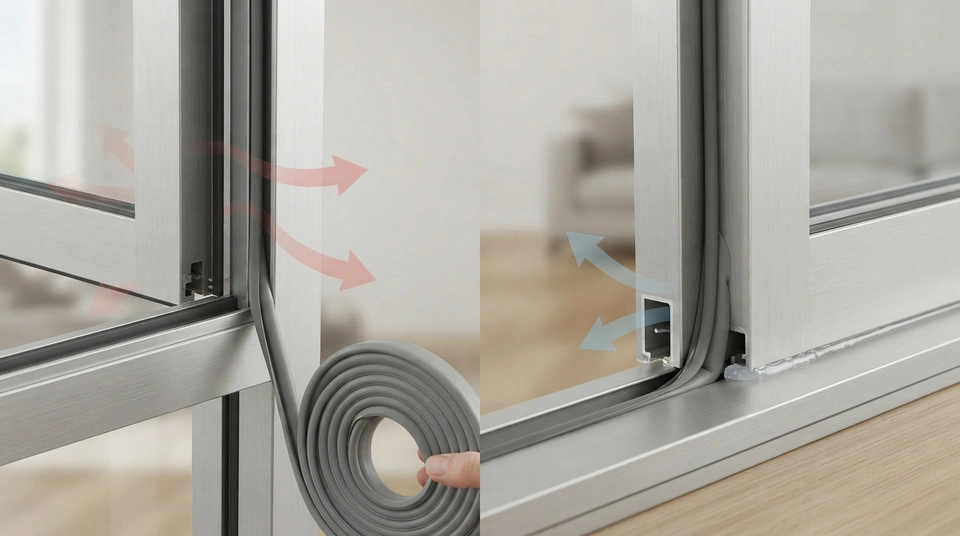
Meeting the 2027 standard requires choosing the correct weather-sealing technology for each window and door profile. Cheap self-adhesive foam strips from hardware stores frequently degrade under UV exposure, lose adhesion, or compress permanently within months, often causing sashes to stick and failing the regulatory requirement that operation must not be impaired. High-performance compliance relies on purpose-built architectural seals.
For external hinged doors, compliance requires a complete three-sided perimeter frame seal combined with a threshold bottom seal. The door jambs and head should be fitted with compression seals—such as silicone bulb gaskets or EPDM rubber profiles mounted in aluminium carriers screwed directly into the door stop. The bottom gap, which is frequently 10 to 15 millimetres high on older homes, must be closed using a heavy-duty brush strip sweep, a flexible rubber blade seal, or an automatic spring-loaded drop-down seal that drops down flush against the threshold only when the door closes.
For aluminium sliding windows and doors, air leakage typically occurs along worn brush pile seals and at the meeting stiles where moving panels interlock. Upgrading requires replacing flattened mohair brush pile in the sash extrusion channels with high-density fin-seal brush strips, installing foam baffle blocks at the top and bottom of sliding tracks, and ensuring interlock extrusions engage securely when latched.
Timber double-hung sash windows represent the most common challenge in Melbourne's Edwardian and Victorian terrace stock. Because timber sashes slide vertically against wooden parting and staff beads, standard foam tape jams the counterweight mechanism. The proven compliance method is installing concealed brush-carrier parting beads and staff beads with integrated nylon brush seals, or silicone V-strip seals fitted into the sash rebate. This eliminates sash rattle and air drafts while allowing the window to glide smoothly.
Awning and casement windows seal by compression when the handle or chain winder pulls the sash against the outer frame. Ensuring compliance involves replacing hardened or cracked perimeter rubber compression gaskets in the frame rebate and adjusting the locking hardware so the sash compresses evenly along all four sides.
For unsealed wall vents, historical plaster and terracotta vents that were built into cavity brick walls decades ago must be permanently blocked using rigid polyurethane insulation inserts, paintable non-shrinking masonry filler, or flush-mounted magnetic/sealed vent covers. This eliminates continuous passive air exchange while maintaining interior wall aesthetics.
Victorian Energy Upgrades (VEU) Discounts and Compliance Costs
Rental providers do not need to shoulder the full cost of weather sealing alone. Under the Victorian Energy Upgrades (VEU) program, the Victorian Government provides financial incentives and certificate-backed discounts for accredited weather-sealing installations carried out by approved VEU providers (Energy Victoria, 2026).
The VEU discount schedule establishes substantial rebates based on property type and product warranty tier. For an apartment upgrade (covering 1 external door, 1 exhaust fan damper, and 4 ceiling outlet seals), the VEU discount provides up to $140 for 5-year warranty products. For a townhouse (2 external doors, 2 exhaust fans, 8 ceiling outlets, 1 chimney seal), the discount reaches up to $560. For a detached house (4 external doors, 3 exhaust fans, 12 ceiling outlets, 1 chimney), the discount provides up to $700.
Eligible products under the VEU weather-sealing activity include perimeter door and window seals, self-closing backdraft dampers for exhaust fans, chimney balloons and dampers, unsealed wall vent plugs, and evaporative cooling outlet covers. According to Sustainability Victoria data, professional draughtproofing typically costs between $200 and $800 per property before subsidies, while cutting household heating energy waste by 25 to 40 per cent. When combined with VEU discounts, the net out-of-pocket expense for landlords is modest, delivering an immediate return on investment through tenant retention and asset protection.
Exemptions: When Is a Rental Property Excused from Draughtproofing?
Schedule 4 of the Residential Tenancies Amendment (Minimum Energy Efficiency Standards) Regulations 2025 outlines specific legal exemptions where a rental provider is excused from complying with the draughtproofing standard. However, an exemption is not automatic; rental providers must obtain and retain formal evidence to defend their position in the event of a Consumer Affairs Victoria inspection or a VCAT dispute (REIV, 2025).
The primary exemption categories include physical or structural impossibility, where the framing design, advanced structural decay, or site layout prevents weather-stripping from being fitted without major structural demolition. A second common exemption applies to multi-unit developments and apartments where modifications to external doors or windows require Owners Corporation (strata) approval and that approval has been formally refused in writing. A third exemption covers heritage-listed properties where local planning schemes or heritage overlays legally prohibit altering original external joinery fabric. Properties with an active building or demolition permit scheduled within a specified timeframe are also exempt.
Rental providers claiming an exemption must retain written evidence—such as a licensed builder's report, council heritage correspondence, or Owners Corporation minutes—and provide it to tenants or regulatory officers upon request.
The 2027–2030 Roadmap: Integrating Draughtproofing, Insulation, and Glazing
Draughtproofing represents one milestone in a coordinated four-year transformation of Victoria's rental housing standards. Understanding how the different stages interact helps property managers plan maintenance budgets efficiently rather than reacting to each regulatory trigger in isolation.
The reform sequence begins on 1 March 2027, when rental providers must replace failed heating systems with energy-efficient electric heating (reverse-cycle split systems), upgrade ceiling insulation to R5.0 where none exists (with VEU rebates opening from October 2026), install 4-star WELS water-efficient showerheads, and replace end-of-life hot water units with heat pumps or efficient electric systems. Draughtproofing follows on 1 July 2027 for new leases and month-to-month conversions. Finally, on 1 July 2030, a hard portfolio deadline requires every Victorian rental home to have fixed cooling in the main living area, regardless of lease status.
Building scientists emphasize that the order of upgrades matters. Sealing uncontrolled air leaks and upgrading ceiling insulation creates a tight thermal envelope. Once the building envelope stops leaking heat, a smaller, less expensive reverse-cycle split system can easily heat and cool the living space, running at peak efficiency and saving renters hundreds of dollars per year.
When draughtproofing is not enough: the role of high-performance glazing
While draughtproofing eliminates convective heat loss (cold air blowing through gaps), it does not alter the conductive heat transfer through the glass pane itself. Single-glazed clear float glass has a high U-value of approximately 5.8 to 6.5 W/m²K, acting as a thermal bridge that radiates winter warmth outside and causes heavy interior condensation and mould. In premium rental renovations or long-term investment holding strategies, combining draught sealing with double glazing, Low-E glass, or thermally broken aluminium frames provides the complete thermal barrier, reducing glass heat loss by up to 50 to 70 per cent and protecting the property from moisture damage.
Action Plan for Landlords, Property Managers, and Renters
With the 1 July 2027 compliance date established, property managers and rental providers should begin preparing immediately during scheduled routine property inspections. A systematic three-step action plan ensures seamless compliance without last-minute trades bottlenecks.
Step one is a building envelope and heating audit. Inspect all external doors, sliding doors, openable sashes, and wall vents to document required seal profiles, and record the exact model of any existing gas space heaters. Step two is scheduling the mandatory gas safety check through a licensed gasfitter within six months of planned draughtproofing work. If open-flued heaters are detected, obtain quotes for reverse-cycle split system replacement. Step three is booking accredited VEU installers to complete perimeter door, window, and vent sealing under government rebate rates.
For renters, the new standards provide enforceable rights. If a property is leased on or after 1 July 2027 without meeting the draughtproofing standard or baseline requirements (such as functioning window latches and window coverings), tenants can request urgent repairs through Consumer Affairs Victoria or apply to VCAT for compliance orders and rent reductions. Working collaboratively with rental providers to facilitate installer access ensures faster upgrades and lower winter energy bills.
Frequently Asked Questions
Does draughtproofing mean landlords must install double-glazed windows?
No. The standard requires fitting perimeter weather-stripping or draught-sealing products to existing external windows and doors to stop air leakage around the frames. It does not mandate replacing single-glazed window units with double glazing, although double glazing remains the highest-performing upgrade for whole-of-home thermal comfort.
Can landlords install DIY draughtproofing products from hardware stores?
Yes, provided the installation restricts airflow around the entire perimeter of all external doors and windows without impairing their normal opening, closing, or latching. However, DIY products do not qualify for VEU government rebates, and self-adhesive foam strips often fail prematurely. Engaging a VEU-accredited installer ensures compliant architectural products with multi-year warranties at heavily subsidized rates.
What happens if a rental property has an open-flued gas heater?
Draughtproofing is legally prohibited until the open-flued or flueless gas heater is decommissioned or replaced with a room-sealed gas appliance or an energy-efficient electric reverse-cycle air conditioner. Sealing a home with an open-flued gas heater creates serious carbon monoxide backdrafting and poisoning hazards.
When does the standard apply if the tenant is on a multi-year fixed lease?
The draughtproofing standard is triggered at the start of a new rental agreement or when an existing fixed-term lease rolls over into a month-to-month periodic tenancy on or after 1 July 2027. If a tenant remains on a continuous fixed-term agreement signed prior to 1 July 2027, the requirement applies when that agreement expires and is renewed.
Are wall vents in older brick houses required to be sealed?
Yes. All unsealed wall vents must be fitted with a robust, non-shrinking sealing material (such as rigid insulation plugs or sealed cover plates) unless a specific gas appliance ventilation exemption applies.
Our Products

Fixed Windows
View system
Sliding Windows
View system
Sliding Doors
View system
Stacker Doors
View system
Awning Windows
View system